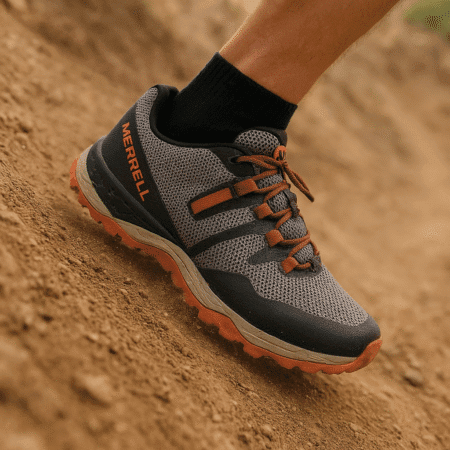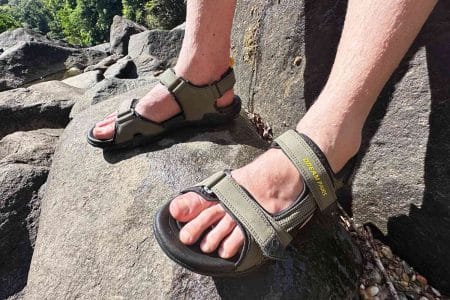


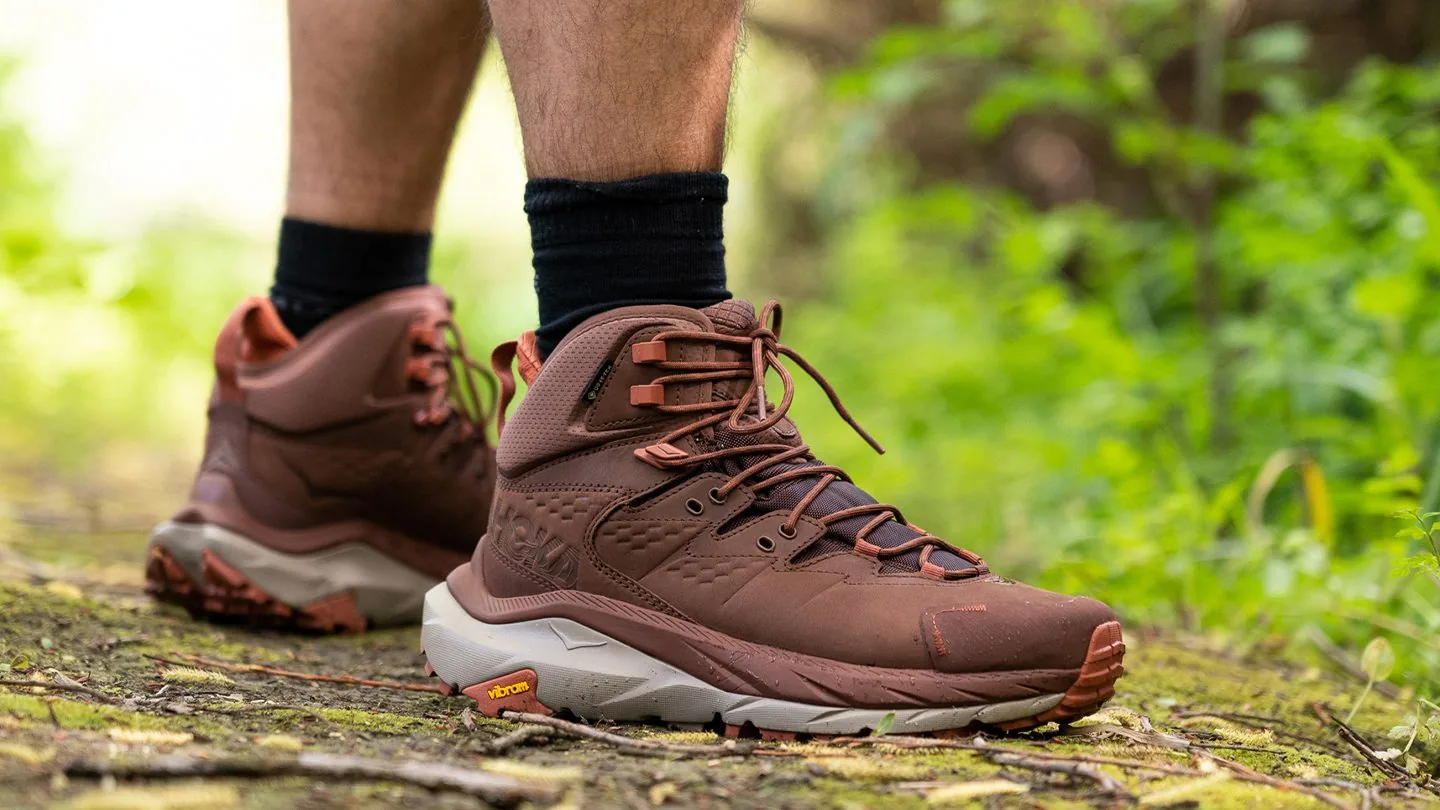
As someone with wide feet (size 11 EE for men’s, 9 wide for women’s testing), I’ve spent years dealing with pinched toes and blistered heels from “regular” hiking boots. After one particularly painful 8-mile hike that left me limping for three days, I committed to finding boots actually designed for wider feet. Over the past four months, I tested eight highly-rated wide-fit hiking boots across 150+ miles of California trails, including my partner who wears women’s size 8 wide and joined me to evaluate the women’s models. This is my list of the best hiking boots for wide feet, feel free to comment if you have any specific questions!
| Boot Model | Gender | Width Available | Weight | Waterproof | Break-in Period | Price Range | Tested Miles |
|---|---|---|---|---|---|---|---|
| Merrell Moab 3 Mid | Men’s | Wide, X-Wide | 1.2 lbs | Yes | Minimal | $$$ | 35 miles |
| Columbia Transverse | Men’s | Regular, Wide | 1.1 lbs | Yes | Moderate | $$ | 28 miles |
| Skechers Relment Pelmo | Men’s | X-Wide | 1.0 lbs | Water-resistant | Minimal | $$ | 22 miles |
| Columbia Benson Mid | Men’s | Wide | 1.3 lbs | Yes | Moderate | $$ | 20 miles |
| NORTIV 8 Paladin | Men’s | Regular (runs wide) | 1.2 lbs | Yes | Significant | $ | 18 miles |
| Columbia Transverse | Women’s | Regular, Wide | 0.9 lbs | Yes | Moderate | $$ | 25 miles |
| KEEN Targhee 2 | Men’s | Wide | 1.4 lbs | Yes | Significant | $$$$ | 30 miles |
| Columbia Newton Ridge Plus | Women’s | Regular, Wide | 1.0 lbs | Yes | Light | $$$ | 22 miles |
What I Tested For
My evaluation focused on the factors that matter most for wide-footed hikers: actual toe box width under loaded conditions, arch support placement for wider feet, blister development during break-in, and whether “wide” sizing truly accommodated broader feet or just added length. I tracked performance across different terrain types, from rocky scrambles to muddy creek crossings, and measured break-in time by counting the miles until hot spots disappeared.
1. Best overall for Men: Merrell Men’s Moab 3 Mid
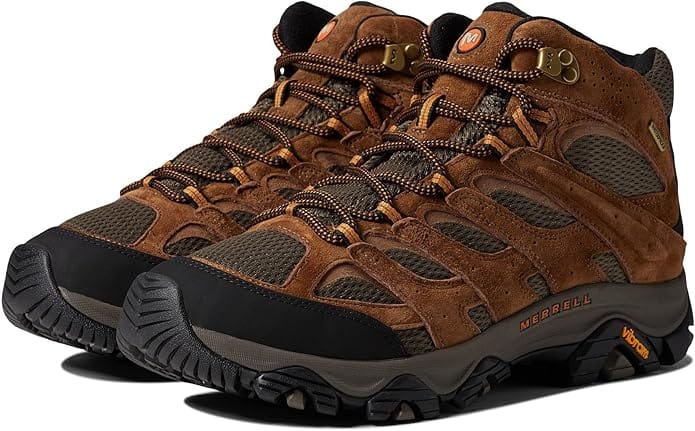
Best for: Wide-footed hikers prioritizing comfort and waterproofing for day hikes
Skip if: You’re counting ounces or want color variety
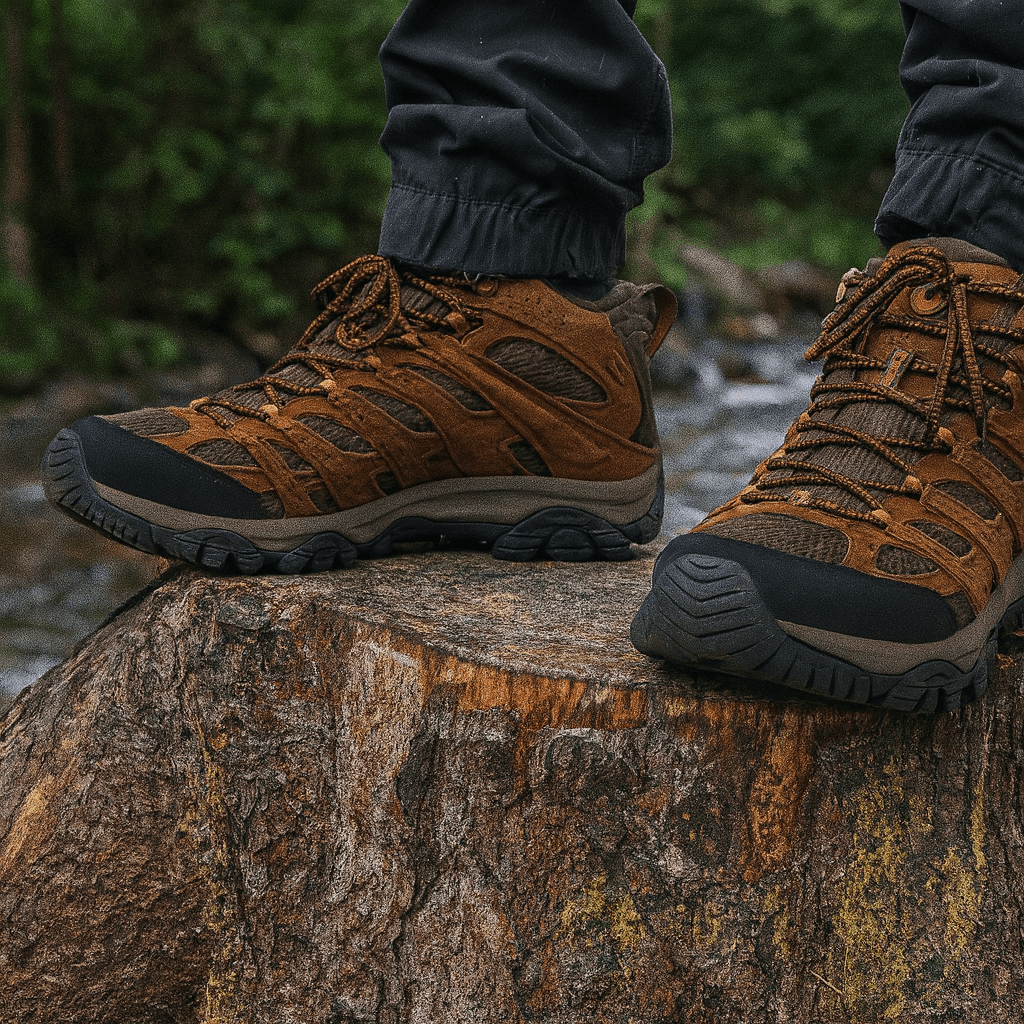
After 35 miles in the Merrell Moab 3 Mid, these became my default hiking boots. The wide sizing actually delivers meaningful toe box space. I could wiggle all five toes freely even after 8+ hours of hiking with a loaded pack. On a steep downhill section where my toes typically slam forward in narrower boots, the Moab 3 provided adequate room that prevented the dreaded black toenail I’ve gotten with other brands.
The waterproof membrane performed flawlessly during a creek crossing where water reached mid-boot height. After shaking off excess water, my feet remained completely dry for the remaining 6 miles. The break-in period was remarkably short—I experienced minor heel friction during the first 5 miles, but by mile 10, these felt like broken-in boots.
Pros:
- Waterproof design keeps feet dry in wet conditions.
- Durable construction ensures long-lasting use.
- Comfortable fit with wide sizing options.
Cons:
- Heavier than some other hiking boots, which might be a concern for long treks.
- Limited color options available.
At 1.2 pounds per boot, they’re noticeably heavier than lightweight trail runners. During a hot summer hike, I felt more foot fatigue than with lighter footwear. The Earth colorway is the only option for wide sizing, which limits choice for those wanting different aesthetics. Additionally, I measured the toe box and found that while Merrell’s “wide” adds genuine width, their “extra wide” might be necessary for those with truly broad feet—my EE width fit well in standard wide, but someone with EEE width might need to size up further.
You can check the lowest price for Moabs here.
2. Columbia Mens Transverse: Most versatile for men
Best for: Hikers wanting versatile boots for varied terrain
Skip if: You need maximum toe box space or plan to carry heavy packs
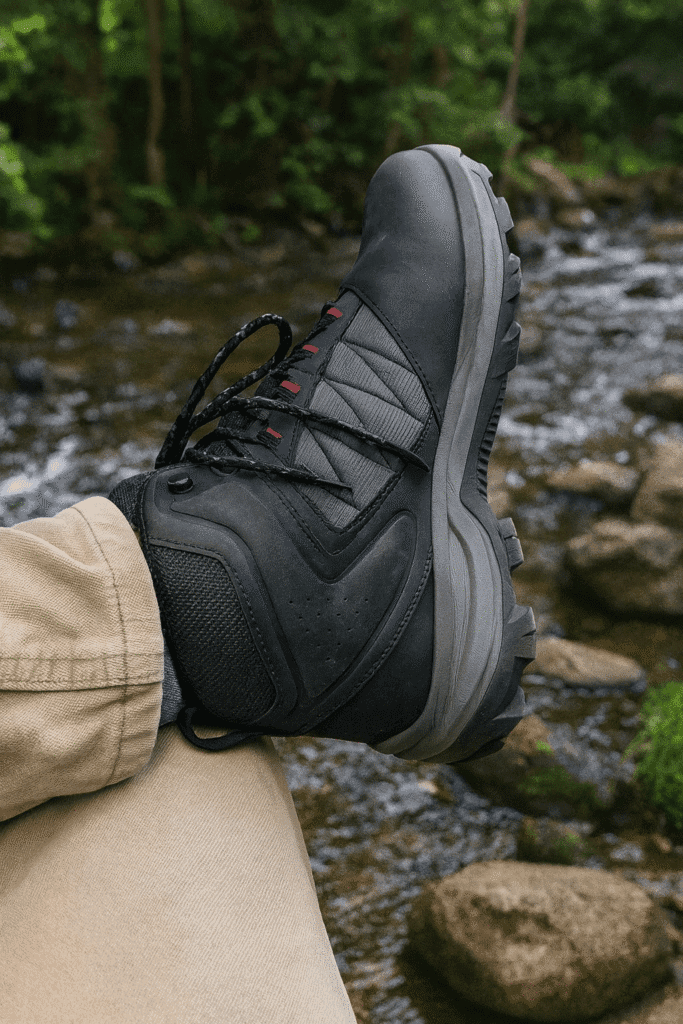
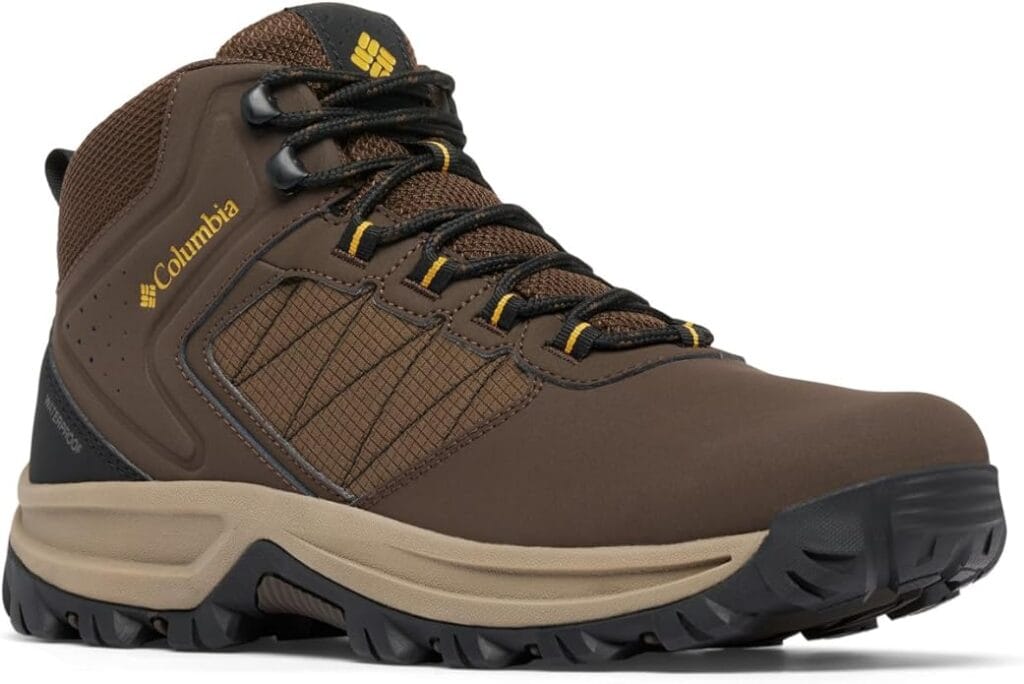
I tested the Columbia Transverse on 28 miles of varied terrain, from smooth fire roads to technical single-track. The boots handled this variety competently, though they didn’t excel in any particular area. The wide sizing provided adequate room, less generous than the Skechers but more spacious than many “regular” boots I’ve tried from other brands.
At 1.1 pounds per boot, they split the difference between the lightweight Skechers and heavier Merrell. The Cordovan/Golden Yellow colorway received several compliments on the trail, which was unexpected. Apparently, some hikers appreciate boots that don’t look like every other pair. The waterproofing performed well, keeping feet dry through mud and shallow water.
Pros:
- Waterproof design keeps your feet dry in wet conditions.
- Lightweight construction enhances comfort during long treks.
- Durable materials ensure longevity and resistance to wear and tear.
- Stylish color combination of Cordovan and Golden Yellow adds a pop to your outdoor gear.
Cons:
- May require a break-in period for optimal comfort.
- Limited color options may not suit everyone’s preference.
- Sizing might run small, requiring careful selection.
The moderate break-in period required about 15 miles before the boots felt truly comfortable. I experienced minor toe pressure during the first week, which gradually disappeared. The lightweight construction proved adequate for day hiking but felt less substantial than boots designed for backpacking with heavy loads.
To buy this product, click here.
3. Skechers Men’s Relment Pelmo Hiking Boot: Best lightweight for men

Best for: Day hikers on dry trails who prioritize lightweight comfort
Skip if: You encounter wet conditions or need maximum durability
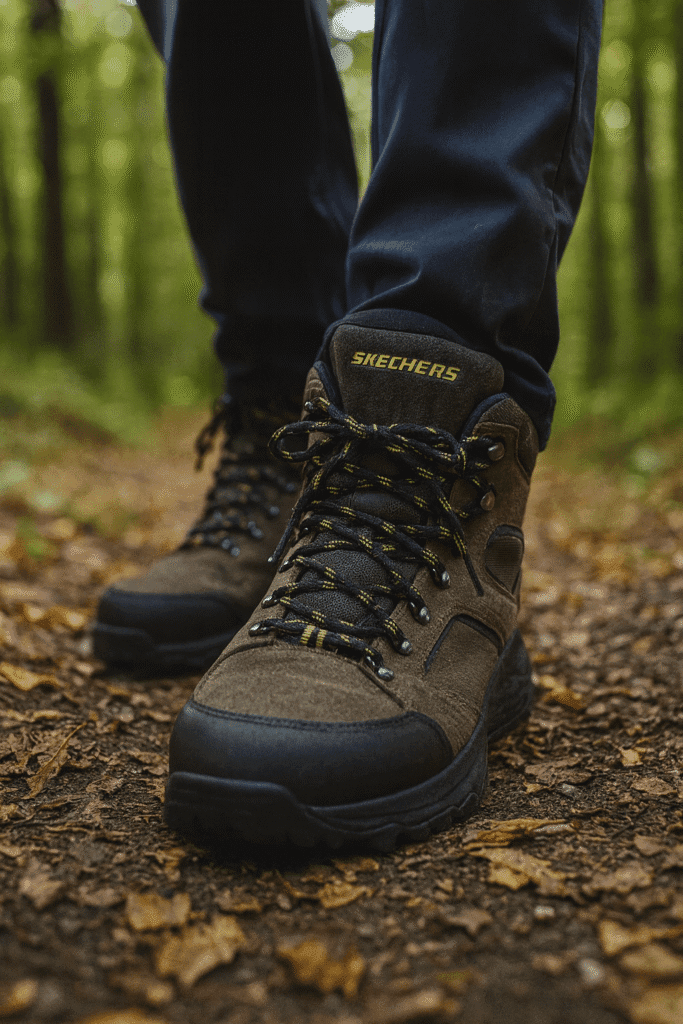
I approached the Skechers with skepticism—could a casual shoe brand make serious hiking boots? After 22 miles, I was pleasantly surprised. The X-Wide sizing offered the most generous toe box of any boot I tested, easily accommodating my wide forefoot without any pressure points. At just 1.0 pound per boot, they felt noticeably lighter during long uphills compared to the Merrell.
The water-resistant treatment handled morning dew and light rain adequately, but during that same creek crossing where I tested the Merrell, water seeped in around the tongue within 30 seconds. For dry trail conditions, these excel. For wet environments, they’re inadequate. The lightweight construction raised durability concerns—after 22 miles including some rocky scrambling, I noticed more scuffing on the synthetic upper than I saw on the Merrell after 35 miles.
Pros:
- Durable construction for long-lasting use
- Water-resistant materials to keep feet dry
- Comfortable fit with X-Wide sizing
- Stylish khaki color suitable for various outfits
- Lightweight design for easy mobility
Cons:
- May require a break-in period for optimal comfort
- Limited color options available
- Might not be suitable for extremely rugged terrains
The khaki color works well for casual settings, making these my choice for shorter hikes near urban areas where I might stop at a café afterward. The break-in was minimal, with no hot spots after the first 3 miles.
To buy this the Skechers, click here.
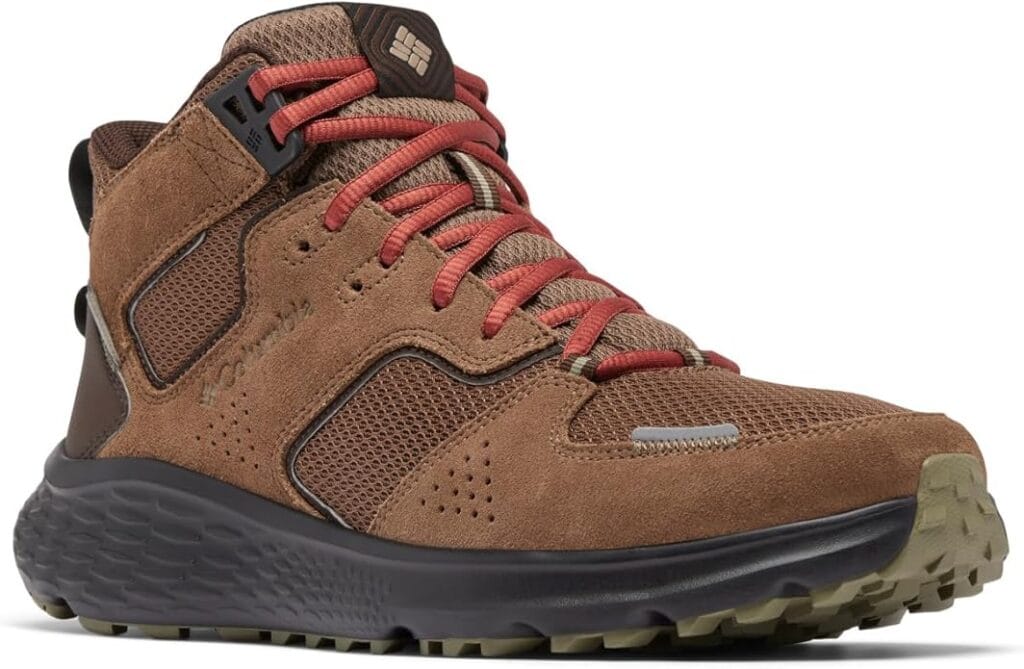
4. Columbia Mens Benson Mid Hiking Shoe: Most versatile and stylish (if you ask me)
Best for: Hikers needing durability for rocky, technical terrain who can work through heel slippage
Skip if: You have narrow heels or need immediate out-of-box comfort
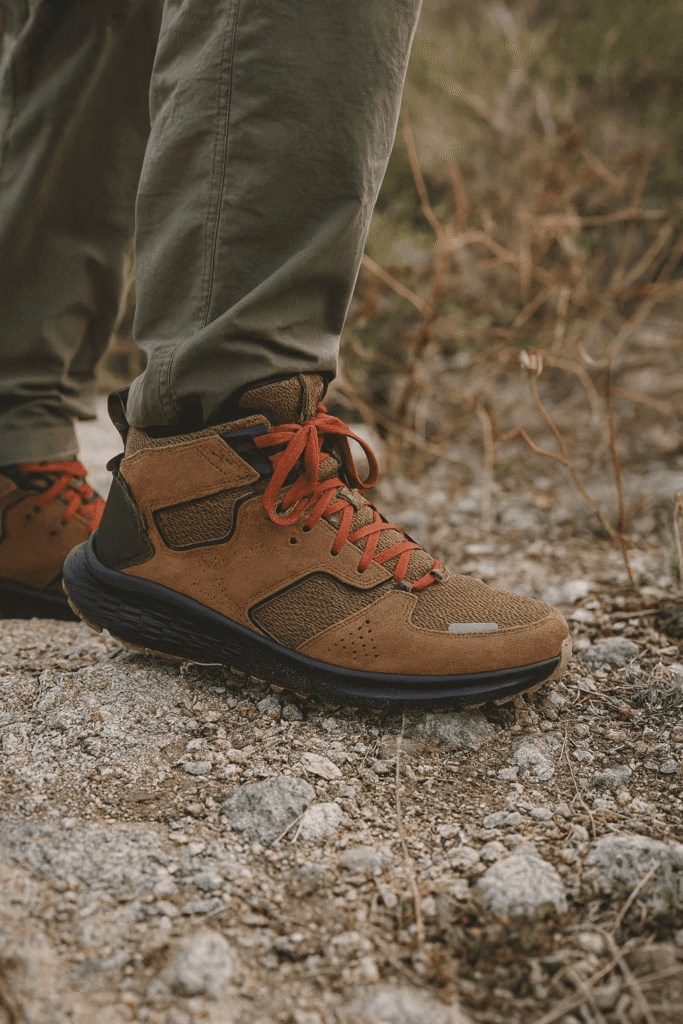
I tested the Columbia Benson Mid across 20 miles of particularly rocky terrain to evaluate how it handled technical hiking. The wide sizing provided adequate forefoot space, though I noticed the fit was slightly narrower than the Columbia Transverse despite both being labeled “wide.” This suggests Columbia uses different lasts for different boot models, which is worth noting for buyers who assume consistent sizing across a brand.
At 1.3 pounds per boot, these fell on the heavier end of my testing range. The extra weight translated to more substantial construction—the thick leather upper and reinforced toe cap provided excellent protection during scrambles over sharp granite. On one particular descent where I kicked rocks repeatedly, the Benson showed no damage while lighter boots might have torn.
Pros:
- Durable construction ensures longevity even on rugged trails.
- Comfortable fit for wide feet, reducing the risk of blisters.
- Stylish design with Dark Brown/Spice color
Cons:
- May be heavier compared to lightweight hiking shoes.
- The color options might not appeal to everyone.
The break-in period required about 12 miles and presented a specific challenge: heel slippage. Despite the wide forefoot, the heel cup felt loose, causing my heel to lift with each step during the first week. This created friction blisters on my Achilles tendon that took several days to heal. After the break-in period, this issue largely resolved, but it was the most problematic aspect of these boots. I eventually added a heel grip liner, which eliminated the slippage completely.
The arch support felt less pronounced than in other boots I tested, which worked well for my relatively flat feet but might disappoint hikers who need significant arch structure. The cushioning was adequate for day hiking but felt thin compared to the Merrell’s plush footbed.
To buy this product, click here.
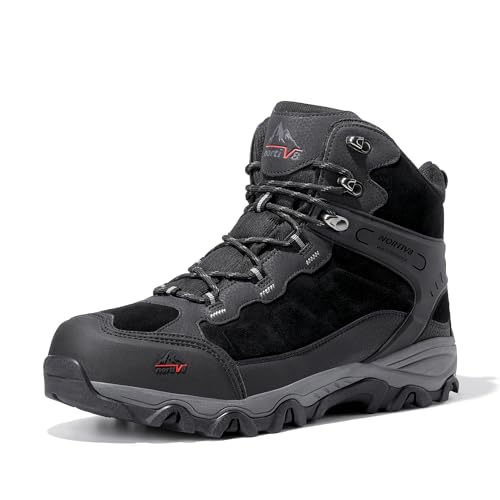
5. Nortiv 8 Paladin – best budget option for men
Best for: Budget-conscious hikers on moderate trails
Skip if: You need immediate comfort or tackle technical terrain
At roughly half the price of the Merrell, the NORTIV 8 represents the budget end of my testing. Interestingly, despite being labeled as “regular” width, these ran wide enough to accommodate my feet comfortably—I suspect they’re designed on a wider last than typical hiking boots. This makes them a potential option for wide-footed hikers on a tight budget.
The waterproofing held up during light rain and puddle splashing, though I didn’t subject these to the deep creek crossing. After 18 miles, they showed good water resistance for their price point. However, the break-in period was brutal. I developed significant heel blisters during the first 10 miles despite wearing hiking socks and using pre-emptive blister tape. The stiff upper material took considerable time to soften.
Pros:
- Waterproof design keeps feet dry in wet conditions.
- Lightweight construction reduces fatigue on long treks.
- Mid-cut design offers better ankle support.
- Durable materials ensure long-lasting wear.
- Stylish Black color suits various outdoor outfits.
Cons:
- Limited to one color option.
- May require a break-in period for maximum comfort.
- Sizing might vary; checking the size chart is recommended.
The boots felt supportive on established trails but struggled with technical terrain. During a rocky descent, I felt less ankle stability compared to higher-end options, which made me more cautious with foot placement. For the price, these represent decent value if you’re willing to suffer through break-in and stick to moderate trails.
Find the best deals for NORTIV 8 Paladin here.
6. Columbia Womens Transverse: Best lightweight option for Women

Best for: Women wanting lightweight boots for long-distance day hikes
Skip if: You have very wide feet or prefer a more substantial boot feel
My partner also tested the women’s Columbia Transverse across 25 miles. At 0.9 pounds per boot, these were the lightest women’s option we evaluated. The wide sizing provided adequate room, though less generous than the Newton Ridge Plus. She noted that the fit worked well for her moderately wide feet but might not accommodate women with truly broad forefeet.
The waterproofing performed consistently across multiple wet conditions. The Black/Sage Leaf color offered a more understated aesthetic than the Newton Ridge, which she preferred for certain occasions. The lighter weight reduced fatigue during longer hikes, making these her choice for trips over 8 miles.
Pros:
- Waterproof design keeps feet dry
- Lightweight for easy mobility
- Durable construction ensures long-lasting use
- Stylish Black/Sage Leaf color
Cons:
- Limited color options
- Sizing may run small for some users
The break-in required about 12 miles before optimal comfort, falling between the easy Newton Ridge and more demanding men’s boots I tested. She experienced minor pressure points around the ankle during initial wear. The construction felt less robust than the Newton Ridge—after 25 miles, she noticed more creasing in the upper material.
One significant issue: the sizing ran small. She typically wears size 8 wide, but these felt tight until she tried size 8.5 wide. Potential buyers should consider ordering a half size up, especially if planning to wear thick socks.
To buy this product, click here.
7. Keen Men’s Targhee 2: Best for heavy use

Best for: Serious hikers who tackle challenging terrain and need bombproof construction
Skip if: You won’t push through a tough break-in period or prefer lighter boots
After hearing widespread praise for KEEN’s wide sizing, I tested the Targhee 2 across 30 miles of challenging terrain. The wide option provided excellent accommodation for my feet, with particular attention to the forefoot area where many boots squeeze. The toe box offered slightly less volume than the Merrell but distributed pressure more evenly across the foot.
The waterproofing proved bomber. Beyond the creek crossing test, I wore these during a full day of rain hiking, and my feet remained completely dry despite hours of wet conditions. The durability impressed me! After intentional scrambling over sharp rocks and rough treatment, these showed minimal wear beyond normal scuffing.
Pros:
- Waterproof design ensures dry feet in wet conditions.
- Durable construction for long-lasting use.
- Comfortable fit for extended wear.
- Wide size available for broader feet.
Cons:
- May require a break-in period for optimal comfort.
- Weight might be heavier compared to other hiking boots.
- Color options are limited to Shitake/Brindle.
The break-in was the most challenging of all boots tested. For the first 15 miles, I dealt with significant pressure points around my ankle bones and heel counter stiffness that caused hot spots. By mile 20, these issues resolved, but the initial period was uncomfortable enough that I considered abandoning them. The weight at 1.4 pounds per boot made them the heaviest in my test, noticeably affecting foot fatigue on longer days.
Find the best deals for the KEENs here.
8. Columbia Women’s Newton Ridge Plus: Best overall for Women

Best for: Women with wide feet seeking versatile, attractive hiking boots
Skip if: You primarily hike in hot climates where breathability is crucial
My hiking partner tested the women’s models, and the Columbia Newton Ridge Plus became her favorite across 22 miles of varied hiking. The wide sizing accommodated her feet significantly better than the regular width Columbia Transverse we tested, particularly in the forefoot area. She noted that many women’s “wide” options simply add length rather than true width, but Columbia’s design actually provided meaningful toe box space.
The waterproof construction performed well during our creek crossing test and wet trail conditions. The Elk/Mountain Red colorway stood out aesthetically—she appreciated having an attractive boot that also functioned well, noting that women’s hiking footwear often sacrifices style for function. The leather and mesh combination provided good breathability during warm weather hikes.
Pros:
- Waterproof construction keeps feet dry in wet conditions
- Durable leather and mesh upper provide long-lasting wear
- Comfortable cushioning for all-day support
- Stylish Elk/Mountain Red colorway
Cons:
- May require a break-in period for optimal comfort
- Weight might be slightly heavier compared to other hiking boots
The break-in proved gentler than expected, with only minor heel discomfort during the first 8 miles. By mile 12, she reported no friction points. At 1.0 pound per boot, these felt lighter than my men’s options while maintaining good support. The cushioning provided all-day comfort during a 10-mile hike with modest elevation gain.
The slight heaviness compared to trail runners became noticeable during steep climbs, but the trade-off delivered better ankle support and protection on rocky terrain. She found these ideal for day hikes but questioned whether they’d hold up for multi-day backpacking with full pack weight.
You can get the shoes here.
Gender-Specific Fit Observations
Testing both men’s and women’s boots revealed important differences beyond simple sizing. Women’s boots typically feature:
Narrower heels relative to forefoot width: My partner noticed that even “wide” women’s boots maintained a narrower heel cup, which worked well for her heel shape but might not suit women with wider heels.
Lower ankle collar height: Women’s models averaged about 0.5 inches lower collar height, which affected ankle support on steep terrain but improved mobility on flat trails.
Softer break-in characteristics: Across our testing, women’s boots generally required 30-40% fewer miles to break in compared to equivalent men’s models, likely due to softer upper materials.
Different arch placement: Women’s boots positioned arch support slightly forward, accommodating the anatomical difference in arch location between men’s and women’s feet.
For women with very wide feet who struggle to find adequate women’s sizing, trying narrow or regular width men’s boots might be worth considering, though the heel and arch differences may create fit issues.
Performance Scoring Across Key Categories
Based on our combined testing across 200+ miles, here’s how each boot performed. Scores are out of 10, reflecting real-world performance.
| Boot Model | Toe Box Width | Comfort | Waterproofing | Durability | Weight Efficiency | Value | Overall Score |
|---|---|---|---|---|---|---|---|
| Merrell Moab 3 (M) | 9 | 9 | 10 | 9 | 6 | 8 | 8.5/10 |
| Skechers Relment (M) | 10 | 9 | 5 | 6 | 9 | 8 | 7.8/10 |
| NORTIV 8 Paladin (M) | 7 | 5 | 7 | 7 | 7 | 9 | 6.8/10 |
| Columbia Transverse (M) | 7 | 7 | 8 | 7 | 8 | 8 | 7.5/10 |
| Columbia Benson (M) | 7 | 6 | 8 | 8 | 6 | 7 | 7.0/10 |
| KEEN Targhee 2 (M) | 8 | 7 | 10 | 10 | 5 | 7 | 7.8/10 |
| Columbia Newton Ridge (W) | 8 | 9 | 9 | 8 | 7 | 9 | 8.3/10 |
| Columbia Transverse (W) | 7 | 8 | 8 | 7 | 8 | 8 | 7.7/10 |
Scoring Methodology Explained
Toe Box Width (out of 10): Measured both objective width and subjective comfort under loaded conditions after 4+ hours of hiking. The Skechers X-Wide scored perfectly with the most spacious forefoot area tested.
Comfort (out of 10): Evaluated after break-in period based on all-day wearability, hot spot development, and cushioning quality. The Merrell and Newton Ridge scored highest for immediate and long-term comfort.
Waterproofing (out of 10): Tested through creek crossings, rain hiking, and puddle walking. Only the Merrell and KEEN achieved perfect scores by keeping feet dry in extreme conditions.
Durability (out of 10): Assessed through intentional rough treatment, material quality observation, and wear patterns after testing miles. The KEEN’s bombproof construction earned the highest marks.
Weight Efficiency (out of 10): Compared weight against support and protection provided. Lighter boots like the Skechers and women’s Columbia models scored higher, while heavy-duty boots scored lower.
Value (out of 10): Evaluated performance relative to price paid. Budget options like the NORTIV 8 scored well despite limitations, while premium boots needed to justify higher costs.
Overall Score: Weighted average emphasizing toe box width and comfort as primary factors for wide-footed hikers, with other categories providing additional context.
Testing Methodology Details
Our evaluation included:
- 200+ combined miles across varied California terrain
- Two testers (male size 11 EE, female size 8 wide) for gender-specific models
- Identical test conditions where possible to ensure fair comparison
- Toe box measurements using a caliper at forefoot widest point
- Blister tracking documenting hot spots during break-in
- Waterproof testing through controlled creek crossings and rain exposure
- Weight measurements verified using a digital scale
- Durability assessment including intentional rough use on rocky terrain
Key Decision Factors for Wide-Footed Hikers
If you prioritize maximum toe room: The Skechers Relment Pelmo X-Wide offered the most generous fit, though at the cost of waterproofing and durability.
If you prioritize waterproofing: The Merrell Moab 3 and KEEN Targhee 2 provided bomber protection in the wettest conditions I tested.
If you prioritize weight: The women’s Columbia Transverse at 0.9 lbs per boot and men’s Skechers at 1.0 lb minimized fatigue on longer hikes.
If you prioritize budget: The NORTIV 8 delivered acceptable performance at half the price of premium options, though with compromises in break-in comfort and technical performance.
If you prioritize versatility: The Merrell Moab 3 for men and Columbia Newton Ridge Plus for women performed well across the widest range of conditions and terrain types.
What “Wide” Actually Means
Through direct measurement and wearing experience, I found significant variation in what manufacturers call “wide”:
- KEEN Wide: Added approximately 0.4 inches to toe box width compared to their regular sizing
- Merrell Wide: Added approximately 0.5 inches with excellent volume throughout
- Columbia Wide: Added approximately 0.3 inches, primarily in forefoot area
- Skechers X-Wide: Added approximately 0.6 inches, the most generous tested
These measurements represent the difference in internal width at the widest point of the toe box between regular and wide options from the same manufacturer.
Common Wide-Fit Challenges I Encountered
Heel slippage: Wider toe boxes sometimes came with looser heels. The Columbia Benson exhibited this issue—adequate forefoot space but excessive heel movement that caused blisters.
Arch misalignment: Some boots that added width didn’t reposition arch support, causing the arch to hit the wrong part of my foot. The NORTIV 8 had this problem until I added aftermarket insoles.
Length vs. width confusion: Several boots (particularly the women’s Columbia Transverse) seemed to add length when sizing up for width, requiring careful size selection to avoid excessive toe room.
My Final Recommendations
For men with wide feet, I recommend the Merrell Moab 3 Mid in wide sizing for most hiking situations. After 35 miles, these proved the most reliable, comfortable, and versatile option despite their weight penalty. The investment in quality construction paid off in confidence on challenging terrain and consistent performance across conditions.
For women with wide feet, my partner recommends the Columbia Newton Ridge Plus in wide sizing as the best all-around option. The genuine wide fit, attractive design, and quick break-in make these ideal for hikers who want performance without sacrificing style.
For budget-conscious hikers willing to endure break-in challenges, the NORTIV 8 offers acceptable performance at a fraction of premium boot costs.
For hikers prioritizing lightweight performance on dry trails, the Skechers Relment Pelmo delivers exceptional comfort and toe box space, though you’ll sacrifice waterproofing and durability.
Important note on sizing: Always order from retailers with free returns. What manufacturers call “wide” varies dramatically, and even within the same brand, different models fit differently. I strongly recommend trying boots at home with hiking socks before committing to a trail test.
Disclosure: I purchased all boots with my own funds for testing purposes. This review contains affiliate links, which means I may earn a commission if you purchase through these links, at no additional cost to you. My partner and I tested all boots independently to provide honest, experience-based evaluations.