

Most people overthink their first hike. They worry about getting lost, running out of water, or looking foolish on the trail. The reality is much simpler: hiking is just walking in nature, and you already know how to walk.
What makes hiking different from a neighborhood stroll is the planning involved. You need to know where you’re going, what to bring, and how to stay safe when you’re away from roads and cell towers. These aren’t complicated skills, but they do require some basic knowledge that nobody is born with.
This guide to hiking for beginners walks you through everything you need for your first few hikes. You’ll learn how to pick appropriate trails, what gear actually matters, and the safety basics that experienced hikers follow automatically. By the end, you’ll have a clear checklist for planning your first trail adventure and the confidence to actually do it.
What this guide contains
Finding your first trail
The best first hike is boring on paper. Look for trails under 5 miles with less than 500 feet of elevation gain. These numbers might sound arbitrary, but they represent about 2-3 hours of hiking at a relaxed pace, which gives you time to enjoy yourself without exhausting your legs or testing your endurance.
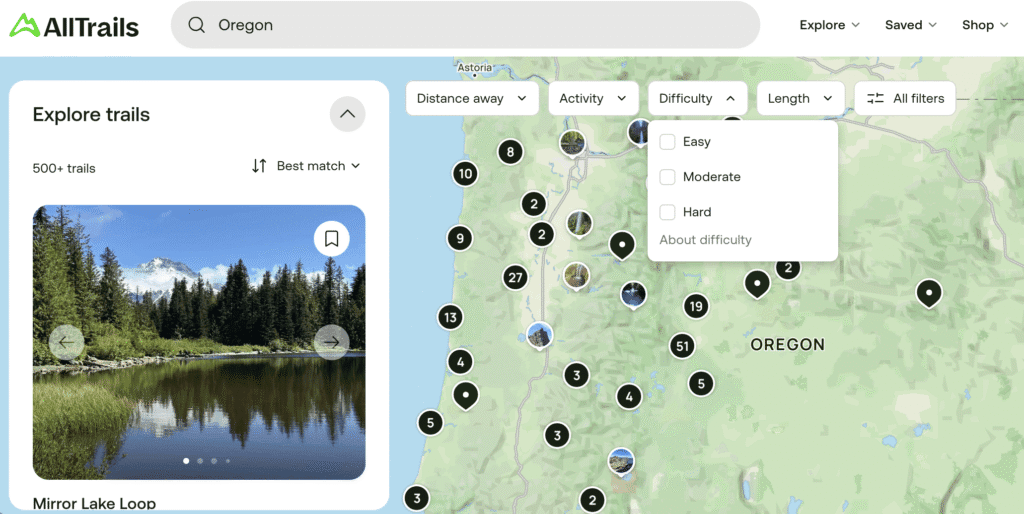
Start your search with these resources:
- AllTrails (website or app): Filter by “Easy” difficulty and read recent reviews
- Local state park websites: Often list beginner-friendly nature loops (NPS has a great “Find a park” search function)
- Visitor centers: Rangers know which trails work best for beginners
Pay attention to recent trail conditions in reviews. A normally easy trail becomes challenging when it’s muddy, icy, or overgrown. Check reviews from the past two weeks to understand current conditions. Look for mentions of parking availability too, since popular beginner trails often fill up early on weekends.
Choose loop trails over out-and-back routes when possible. Loops keep the scenery changing and eliminate the mental challenge of knowing you have to repeat the same distance to return. Save the spectacular mountain summits for later. Your first goal is finishing comfortably, not conquering peaks.
4,000 hikers get lost every year – Don’t let it happen to you (Source: Survival Dispatch)
Always tell someone where you’re hiking and when you plan to return. Share the trail name, parking area, and expected finish time. This simple habit could save your life if something goes wrong.
Essential gear that actually matters
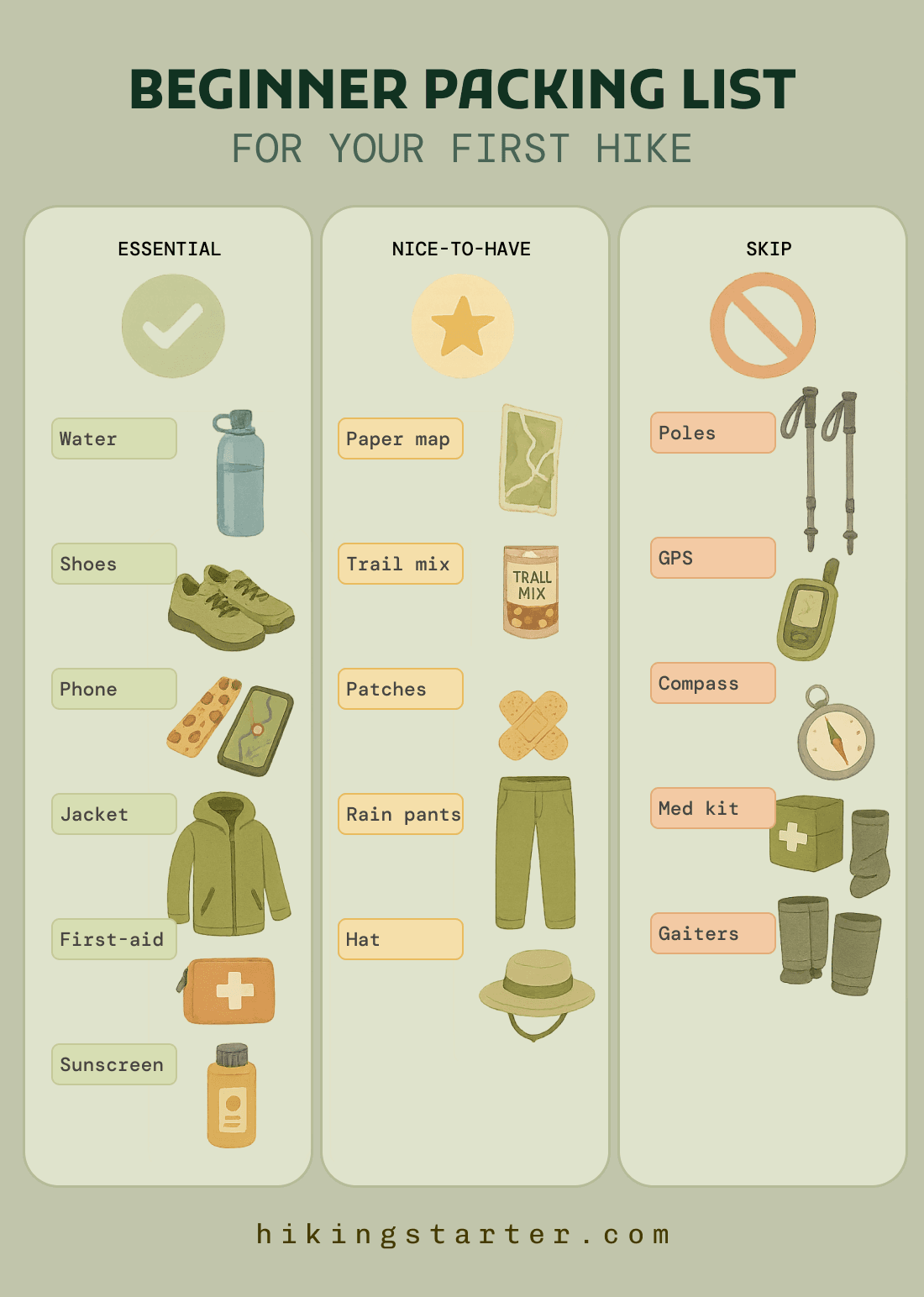
You don’t need expensive equipment to start hiking. Most beginners already own half of what they need, and the rest can be acquired gradually as you discover what kind of hiking you enjoy.
| Essential Items | Nice to Have | Skip for Now |
|---|---|---|
| Comfortable walking shoes | Hiking boots | Trekking poles |
| Water (2 bottles minimum) | Hydration bladder | GPS device |
| Snacks | Hiking backpack | Freeze-dried meals |
| Phone with downloaded map | Paper map backup | Compass |
| Small first aid kit | Blister patches | Full medical kit |
| Rain jacket | Rain pants | Gaiters |
| Sunscreen | Hat with brim | Buff/neck gaiter |
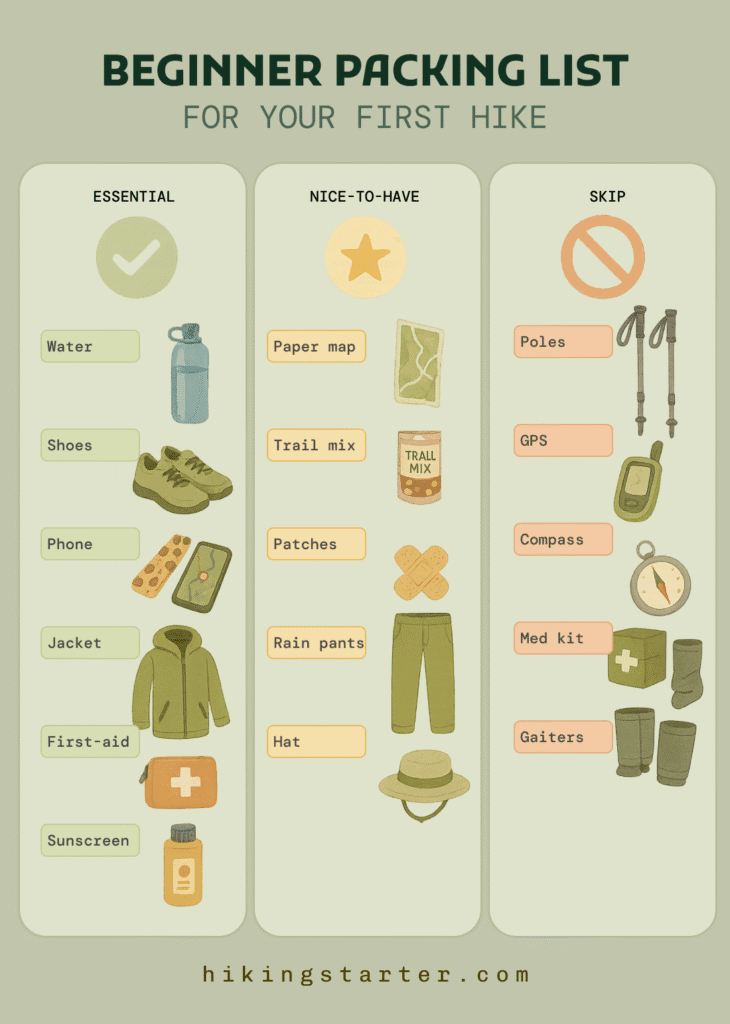
Your shoes matter most. They don’t need to be hiking boots, just comfortable shoes with decent tread that you’ve already worn for walking. Avoid brand new footwear on your first hike, since blisters turn a pleasant walk into misery. Athletic shoes work fine for maintained trails without significant rocks or roots.
Pack more water than you think you need. The general rule is half a liter per hour of hiking, but beginners often need more. Bring at least 1.5 liters for a 3-hour hike, especially in warm weather. Plain water works fine, though some hikers prefer electrolyte mixes on hot days.
Skip advanced items. Do not get blocked by thinking you need all the fancy gear. The basics are simple – good shoes, enough water, and a way to navigate. If you limit your first hike to a well-known and not too challenging trail you will be fine.
Understanding trail markers and navigation
Getting lost ranks as the top fear for new hikers, but trail navigation is simpler than driving in an unfamiliar city. Most maintained trails use consistent marking systems that become obvious once you know what to look for.
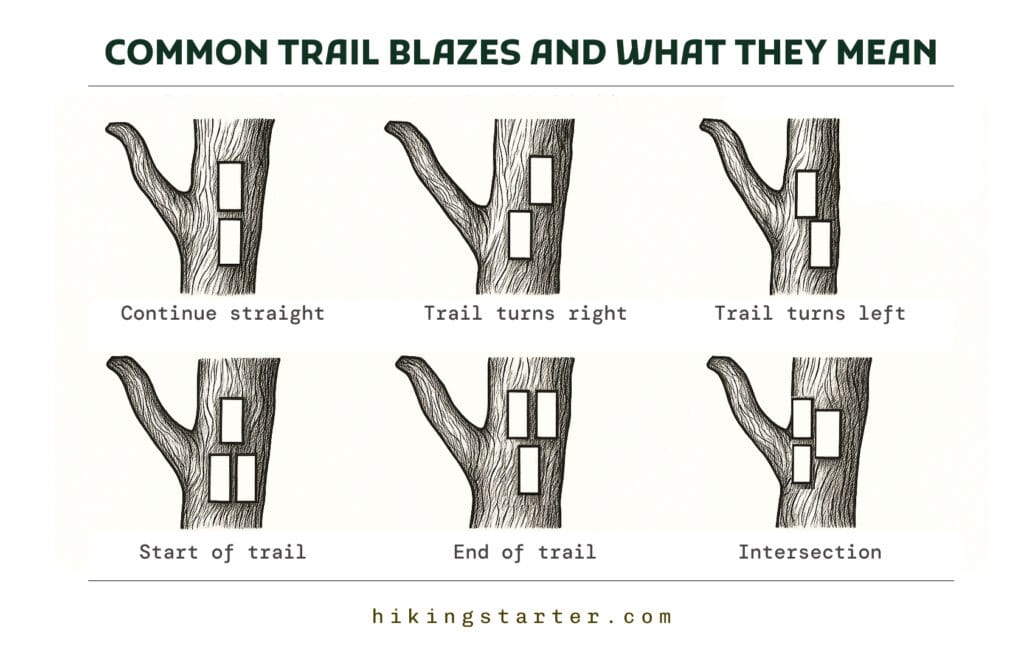
Trail blazes are painted marks on trees, usually rectangles about 2 inches by 6 inches at eye level. Each trail uses a specific color, noted on trail maps and junction signs. You should see a blaze every 100-200 yards on maintained trails. Two blazes stacked vertically means pay attention: the trail is about to turn.
Download offline maps before you leave home. Apps like AllTrails, Gaia GPS, or even Google Maps let you save trail maps for use without cell service. Screenshot the trail map as backup, including the parking area and any trail junctions. Your phone’s GPS works even in airplane mode, so you can track your location on the downloaded map.
Trail junctions usually have signs, but not always. When you reach an intersection, look for blazes about 20 feet down each option. The correct path will have your trail’s color blaze. If you don’t see any blazes after walking 5 minutes, you probably took a wrong turn. Simply backtrack to the last blaze you saw.
Learn more about Leave No Trace principles to understand how to navigate while minimizing your impact on the trails you explore.
Pacing yourself and reading your body
New hikers almost always start too fast. The excitement of the trailhead combined with fresh legs creates an unsustainable pace that leads to exhaustion within an hour. Your hiking pace should let you maintain a conversation without gasping for breath. If you’re hiking alone, you should be able to speak complete sentences out loud comfortably. I wrote an more in-depth guide about general hiking safety tips for beginners which you can check out as well.
Uphill sections reveal pacing problems immediately. Shorten your steps on climbs rather than powering through with long strides. Taking 100 small steps uses less energy than 50 long ones for the same elevation gain. Watch experienced hikers on steep sections: they move steadily but never rush.
Take breaks before you need them. Stop for 2-3 minutes every 30-45 minutes to drink water and adjust gear. These micro-breaks prevent the buildup of fatigue that forces longer stops later. Find a rock or log to sit on rather than standing, which lets your legs actually recover.
Your body sends clear signals when something needs attention:
- Burning calves or thighs: Slow down and shorten your steps
- Tightness in feet: Stop and retie your shoes
- Hot spots (pre-blisters): Apply tape or bandages immediately
- Headache or dizziness: Drink water and eat something salty
- Sustained heavy breathing: Rest until breathing normalizes
Weather awareness and timing
Weather changes fast in nature, especially in mountains or near large bodies of water. Check the forecast for the specific trail area, not just your home city. Mountain weather often differs dramatically from valleys just miles away.
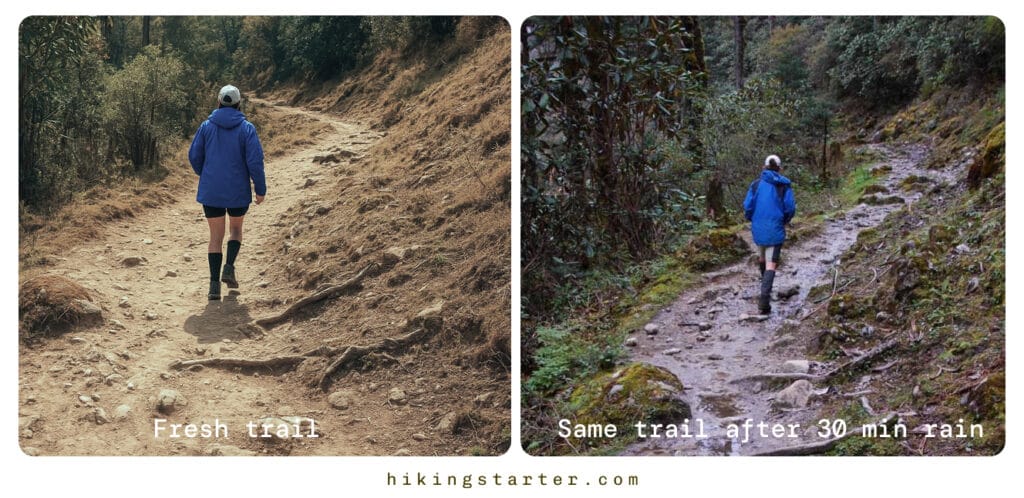
The best hiking weather isn’t always sunny. Overcast days around 55-65°F create ideal conditions: cool enough to prevent overheating but warm enough to stay comfortable during breaks. Rain isn’t necessarily a dealbreaker for hiking, but thunderstorms are. If you hear thunder, head back immediately.
Start early, especially in summer. Parking areas fill up, trails get crowded, and afternoon heat makes hiking harder. A 7 AM start puts you back at your car before the day’s peak heat. Early starts also mean better wildlife sightings and prettier light for photos.
Daylight dictates your schedule more than fitness. New hikers often underestimate how long trails take with photo stops, snack breaks, and navigation checks. Plan to finish at least an hour before sunset. Download a sunrise/sunset app and set an absolute turnaround time, regardless of how close you are to your destination.
Safety basics every hiker should know
Hiking injuries are rarely dramatic. Most problems come from simple preparation failures: dehydration, blisters, or mild hypothermia from cotton clothes in unexpected rain. Understanding basic safety prevents these common issues.
The “10 Essentials” provide a framework for preparedness, though beginners don’t need elaborate versions of each category. For day hikes under 5 miles, focus on:
- Navigation (phone with offline maps)
- Hydration (extra water)
- Nutrition (lunch plus emergency snacks)
- First aid (bandages, tape, pain reliever)
- Emergency shelter (rain jacket and emergency blanket)
Wildlife encounters worry beginners but rarely cause problems. Make noise in areas with poor visibility to avoid surprising animals. If you see larger wildlife like deer or elk, enjoy watching from at least 75 feet away. Bears exist in many hiking areas but attacks are extraordinarily rare. Check if your trail requires bear spray and learn how to use it.
The most dangerous trail hazard is usually other humans being careless. Watch for falling rocks kicked loose by hikers above you. Step aside for faster hikers and mountain bikers. Keep your group together at trail junctions to avoid confusion.
Visit the National Park Service safety page for region-specific safety information and seasonal hazards.
Building confidence through progression
Your first hike teaches you more than reading dozens of articles. Each trail reveals what you personally need: maybe better socks, more snacks, or different shoes. This knowledge only comes from experience, so start with very easy trails and build gradually.
After completing three easy hikes successfully, increase either distance or elevation, but not both simultaneously. A flat 7-mile trail or a hilly 4-mile trail represent reasonable next steps from that initial 5-mile gentle hike. This progression prevents overconfidence injuries while building genuine trail fitness.
Take care of your memories!
Track your hikes in a simple notebook: date, trail name, distance, weather, and what worked or didn’t. This record becomes invaluable for planning future hikes and seeing your progress.
Join local hiking groups on social media to find trail partners and recent condition reports. Many areas have beginner-friendly hiking meetups that welcome newcomers. Hiking with experienced people accelerates your learning while providing built-in safety through numbers.
Making hiking a sustainable practice
The hikers who stick with it are those who find their own rhythm and reasons for being on trails. Some love the fitness aspect, others chase waterfalls or wildlife photography. Many just need regular doses of quiet time away from screens. There’s no wrong reason to hike.
Respect for nature keeps trails open and pristine for everyone. Pack out all trash, including organic waste like apple cores. Stay on marked trails even when they’re muddy, since walking around puddles widens trails and causes erosion. Yield to uphill hikers and horses. These simple courtesies maintain the peaceful atmosphere that makes hiking restorative.
The REI Expert Advice library offers detailed guides on specific skills like backpacking, winter hiking, and wilderness navigation as your interests expand.
Your hiking journey starts with one step
Beginning hikers often wait for perfect conditions or complete preparation that never arrives. The truth is simpler: pick an easy trail, pack water and snacks, wear comfortable shoes, and start walking. Your first hike won’t be perfect, but it will teach you exactly what you need for the second one.
The skills covered here, from reading blazes to pacing yourself, become automatic after just a few trails. What seems overwhelming now will feel natural within a month of regular hiking. The hardest part isn’t learning these skills but simply choosing a date and showing up at the trailhead. Pick a trail this week, set a date, and take that first step into a lifetime of trail adventures.
Common beginner questions
Q: How fit do I need to be to start hiking? A: If you can walk for 30 minutes in your neighborhood, you can handle an easy trail. Choose flat trails under 3 miles initially and build from there.
Q: What if I need to use the bathroom on the trail? A: Many trailheads have facilities, but not all trails do. Learn Leave No Trace bathroom principles: go 200 feet from trails and water sources, dig a 6-inch hole for solid waste, and pack out toilet paper in a ziplock bag.
Q: Should I hike alone as a beginner? A: Solo hiking is safe on popular, well-marked trails, but bring emergency supplies and share your plans with someone. Many beginners feel more confident with a partner initially.
Q: How much does hiking cost to start? A: Your first hike might cost nothing if you have athletic shoes and water bottles. Budget $50-100 for basics like a small backpack, first aid kit, and rain jacket if you don’t own them. Expensive gear can wait until you know you enjoy hiking.