

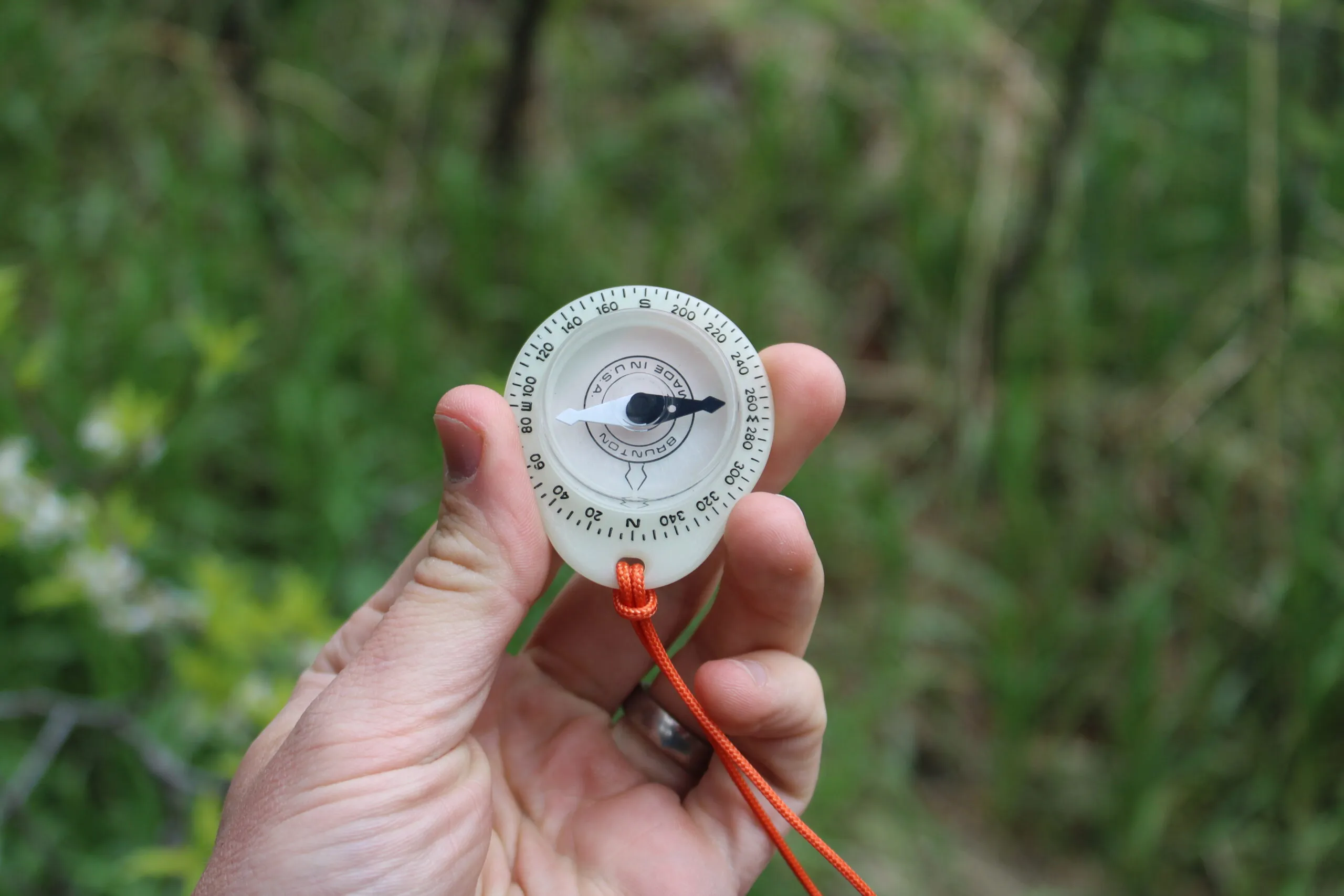
We spent three months testing the best hiking compasses on everything from rainy ridge walks to bushwhacking through thick forest. After getting turned around more times than we’d like to admit, we discovered which compasses actually work when you need them.
Some surprised us with their simplicity, others disappointed despite fancy features. We found solid options from $6 to $24 that’ll keep you oriented without breaking the bank.
Overview Table
| Hiking compass | Price | Best for | Accuracy | Durability | Overall Score |
|---|---|---|---|---|---|
| Coghlan’s Carabiner Compass | $8.99 | Quick checks | 7.5 | 8.0 | 7.2 |
| Orienteering Compass | $9.98 | Beginners | 8.5 | 8.0 | 8.3 |
| Sportneer Compass | $14.39 | Night hiking | 9.0 | 9.0 | 9.2 |
| Cotuxker Hiking Compass | $9.98 | Wet conditions | 8.5 | 9.5 | 8.8 |
| Suunto A-10 | $24.00 | Map work | 9.5 | 9.5 | 9.6 |
| Nihtdoy Outdoor Compass | $5.29 | Budget buyers | 7.0 | 7.0 | 6.5 |
| 133 Supply Paracord Bracelet | $12.95 | Backup nav | 6.5 | 8.0 | 6.8 |
| AOFAR Military Compass | $12.99 | Advanced users | 9.0 | 9.5 | 9.4 |
1. Coghlan’s 1985 Carabiner Compass – Best for Quick checks
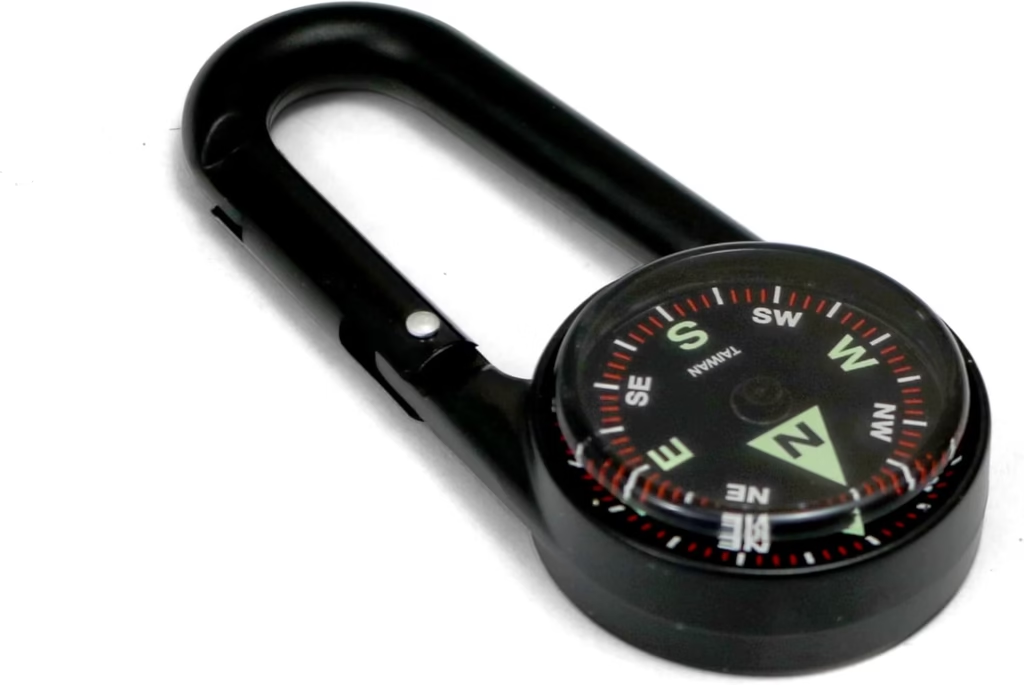
Best for: Anyone who wants a last-resort compass that won’t take up pocket space.
We clipped this tiny compass to our pack for two months, and honestly forgot about it until we needed a quick bearing check during a whiteout. The needle swings freely enough to get you pointed in the right direction, though reading the tiny markings requires good eyes or reading glasses. At one inch square and weighing basically nothing, it disappears on your gear until you need it.
The carabiner design means it lives on your pack zipper or belt loop, always accessible. During testing, it survived getting dunked in streams and bounced around rocky scrambles without breaking. The multi-color design sounds gimmicky but actually helps you spot it quickly in a messy pack. For nine bucks, it’s not replacing your main compass, but it saved our bacon when our phone died 8 miles from the trailhead. Just remember it’s for general direction finding, not precision navigation.
Pros
- Clips anywhere
- Basically weightless
- Cheap insurance policy
- Surprisingly tough
Cons
- Tiny markings hard to read
- Basic direction only
- No declination adjustment
Should you get it?
Great backup option for the price. Primary compass? Look elsewhere.
2. TurnOnSpot Orienteering Compass – Best for Beginners
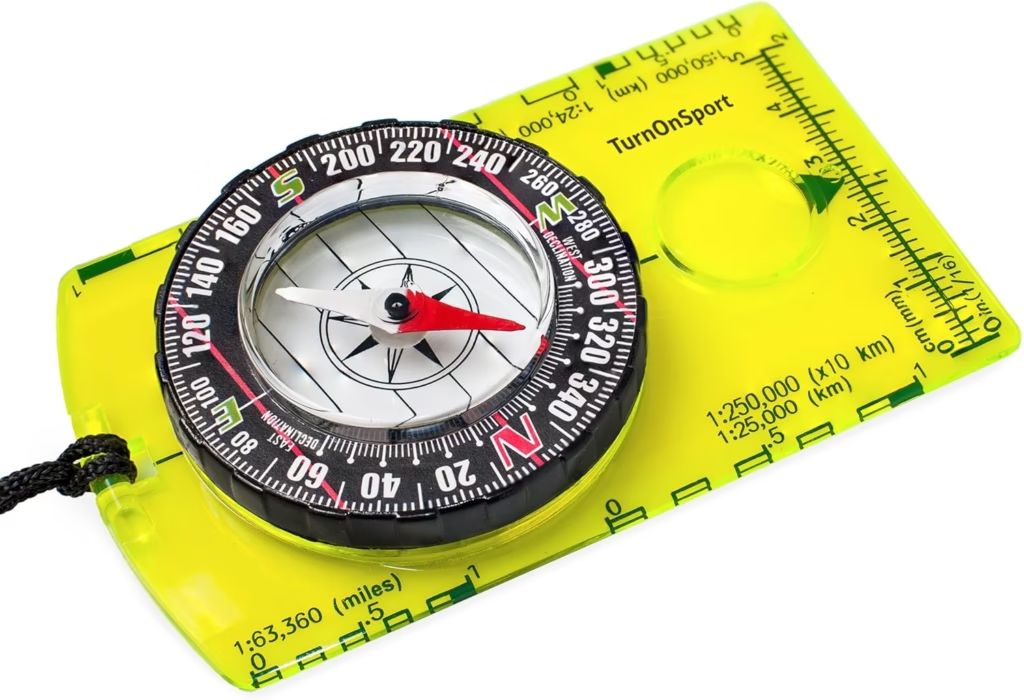
Best for: New hikers learning map and compass skills or scout groups needing reliable basics.
TurnOnSport’s orienteering compass surprised us with how much it offers for ten bucks. The baseplate design with clear degree markings made teaching our nephew basic navigation actually enjoyable. During a week of testing in Colorado’s front range, it consistently pointed north without the needle sticking that plagues cheap compasses.
The bright orange color seems silly until you drop it in pine needles, then you’re grateful. We appreciated the rotating bezel that clicks into place, making it easy to set and follow a bearing even with cold fingers. The ruler edges work great for measuring trail distances on maps, something we used constantly during route planning. After three months of abuse, including getting stepped on and dropped on granite, it still works perfectly. The only real downside is learning curve: you’ll need to watch some YouTube videos or take a class to use it properly.
Pros
- Clear degree markings
- Bright, findable color
- Solid bezel clicks
- Map measuring edges
Cons
- Requires learning time
- No night visibility
Should you get it?
Perfect first real compass. Worth learning to use properly.
⚠️ Always check your compass away from metal objects like trekking poles, belt buckles, or your car. Even small amounts of metal can throw off readings by 20-30 degrees. We learned this the hard way after following a bearing that led us straight into a cliff band.
3. Sportneer Compass – Best for Night hiking
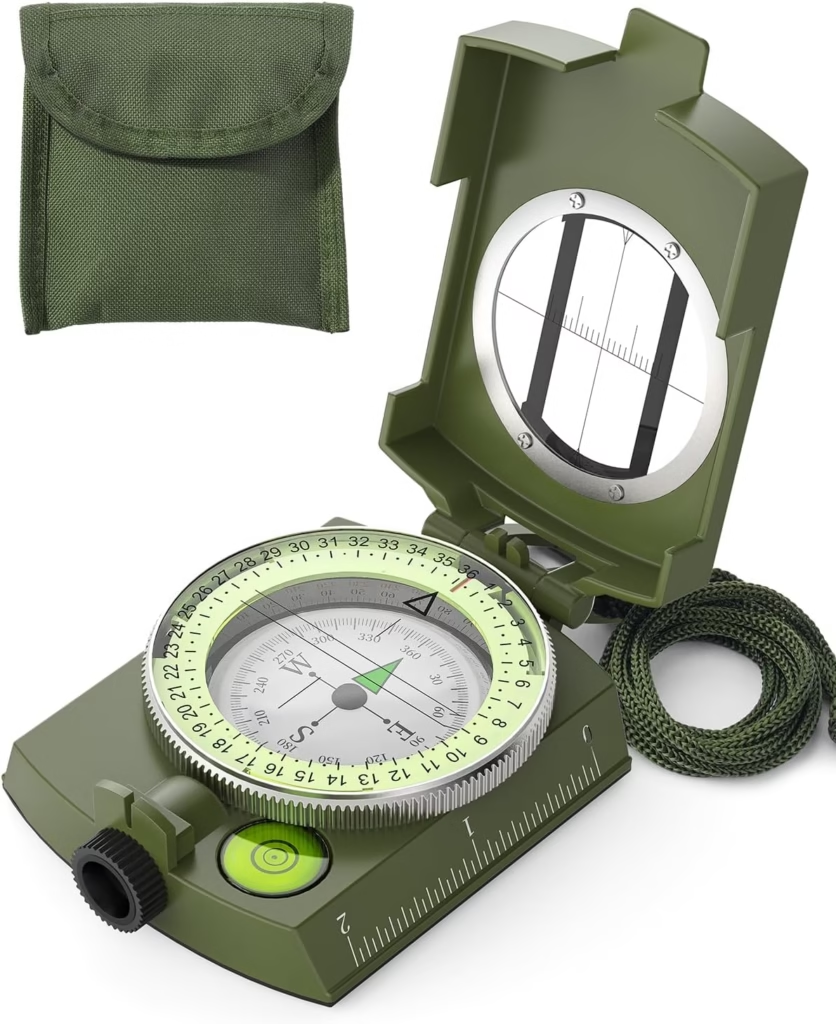
Best for: Hikers who start early or finish late and need reliable navigation in the dark.
The Sportneer earned top marks during our dawn patrol hikes and late-evening scrambles. That glow-in-the-dark feature sounds gimmicky until you’re trying to navigate by headlamp at 5 AM. After charging it with our headlamp for 30 seconds, the markings stayed visible for about 15 minutes, long enough to check bearings without fumbling for lights.
Build quality impressed us too. The needle settles quickly without overshooting, even when we’re breathing hard from altitude. The included neck cord and protective case meant we could keep it handy without worrying about scratches or drops. During a particularly wet trip through Oregon, water beaded right off without affecting performance. At 2.5 ounces with the case, it’s light enough for ultralight setups but substantial enough to handle easily with gloves. The army green color blends into gear a bit too well, so we added a bright cord to the case.
Pros
- Actually glows enough to use
- Fast needle settling
- Waterproof works
- Case prevents scratches
Cons
- Green color hides in pack
- Glow needs recharging
Should you get it?
Best value for serious hikers. The night visibility alone justifies the price.
4. Cotuxker Hiking Compass – Best for Wet conditions
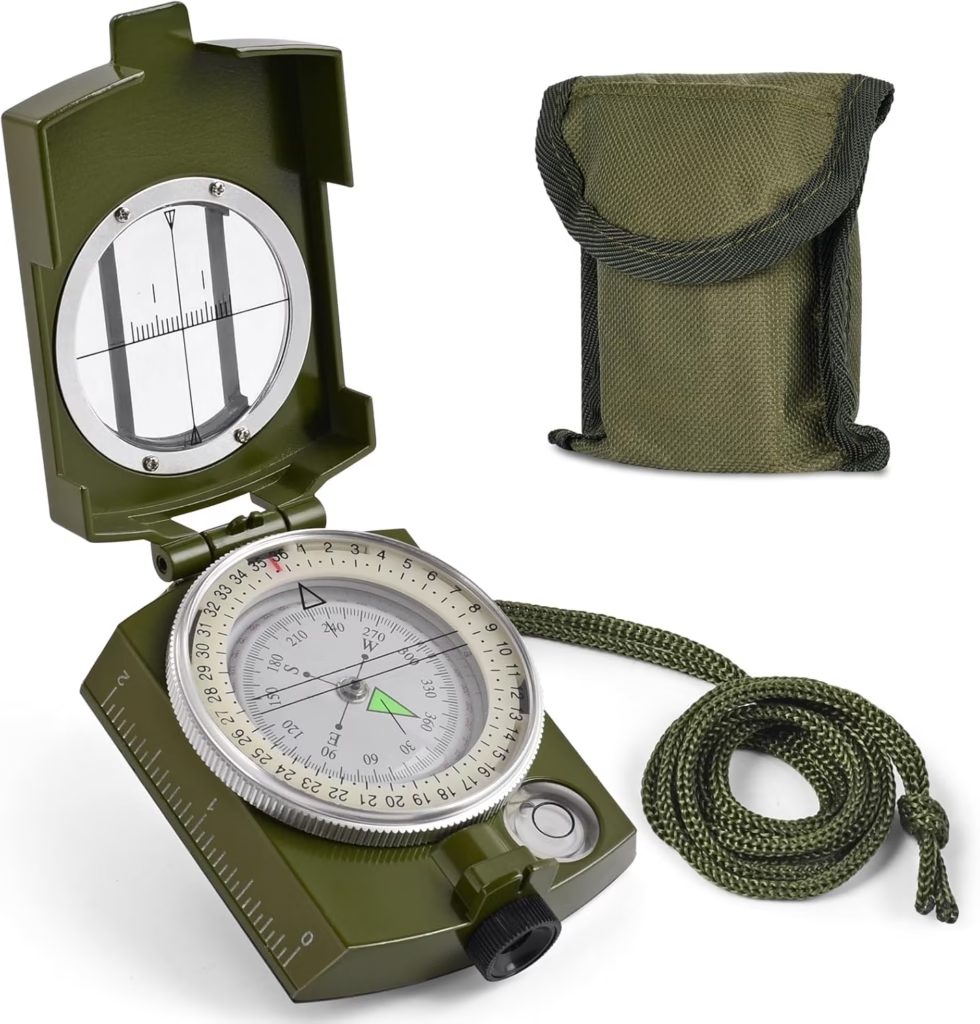
Best for: Hikers in wet climates who need bombproof reliability over fancy features.
COTUXKER’s military-style compass became our go-to during a soggy week in the Cascades. The lensatic design (flip-up magnifying lens) takes practice, but once you figure it out, sighting distant peaks for triangulation becomes second nature. We dropped it in puddles, left it out in thunderstorms, even accidentally kicked it down a rocky slope, and it kept working perfectly.
The metal construction feels substantial at 3 ounces, heavier than plastic alternatives but reassuringly solid. The navy blue finish started showing wear spots after a month, revealing brass underneath, which actually looks pretty cool. Reading precise bearings through the sighting wire takes steady hands, making this better for experienced users. Beginners might struggle with the learning curve. The compact size fits in any pocket, though we wished for luminous markings for dawn starts.
Pros
- Truly waterproof
- Metal body tanks abuse
- Precise sighting system
- Pocket sized
Cons
- Heavy for ultralight fans
- Steep learning curve
Should you get it?
Excellent for wet conditions if you master the sighting system.
5. Suunto A-10 Compass Best for Map work
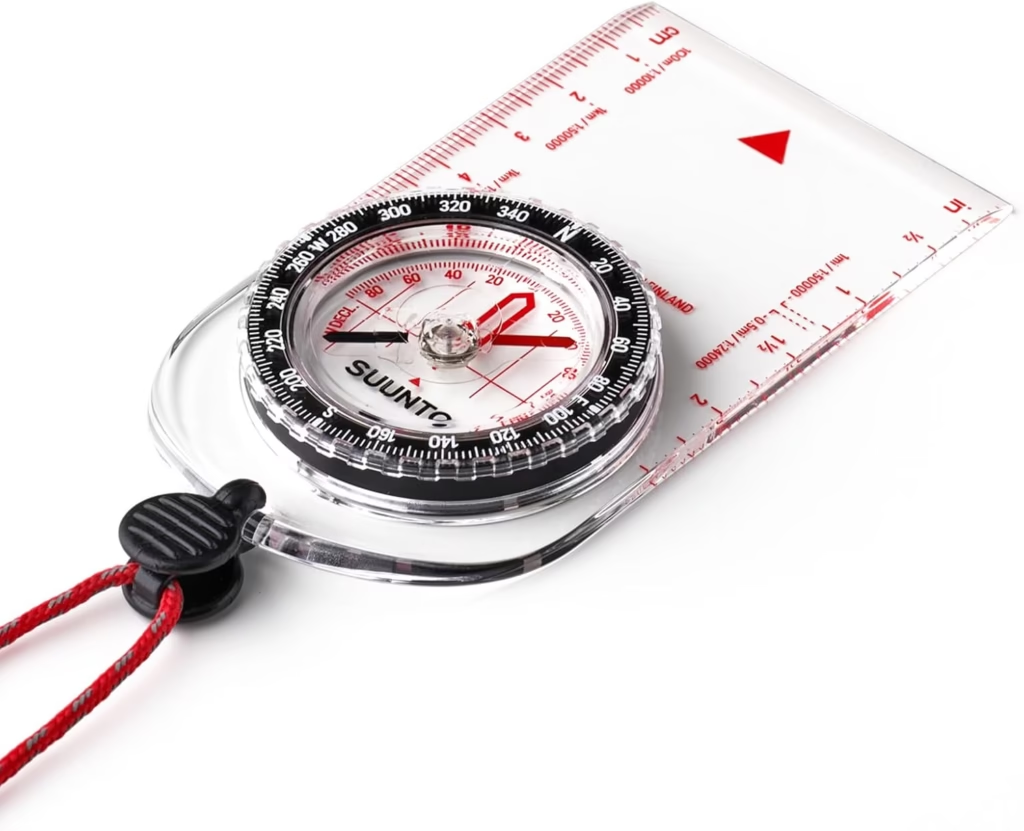
Best for: Hikers who actually use maps and want professional-grade accuracy without the complexity.
After testing eight compasses, the Suunto A-10 emerged as our favorite for actual navigation work. Finnish engineering shows in every detail: the needle settles instantly, the bezel turns smoothly but stays put, and the baseplate markings remain crisp after months of use. During map work at camp, the clear baseplate and precise ruler markings made plotting routes genuinely enjoyable.
At $24, it costs more than basic options, but the quality jump is obvious immediately. The balanced needle works globally (no special zones needed), and the fixed declination scale helps account for magnetic variation. We particularly loved how the curved capsule design eliminates parallax error, making bearing readings accurate even when viewed at angles. The only missing feature is night visibility, but for daylight navigation, nothing else at this price comes close. Scout troops and orienteering clubs choose Suunto for good reason.
Pros
- Instant needle settling
- Crystal clear baseplate
- Professional accuracy
- Built like a tank
Cons
- No glow features
- Priciest option tested
Should you get it?
Worth every penny if you’re serious about navigation. Our top pick overall.
🔋 Reality Check: GPS devices fail, phones die, batteries freeze. We’ve seen expensive Garmin units glitch out in canyon country where satellite signals bounce weird. A quality compass weighs 2 ounces and never needs charging. Consider it mandatory backup, not optional gear.
6. Nihtdoy Multipurpose Outdoor Compass – Best for Budget buyers
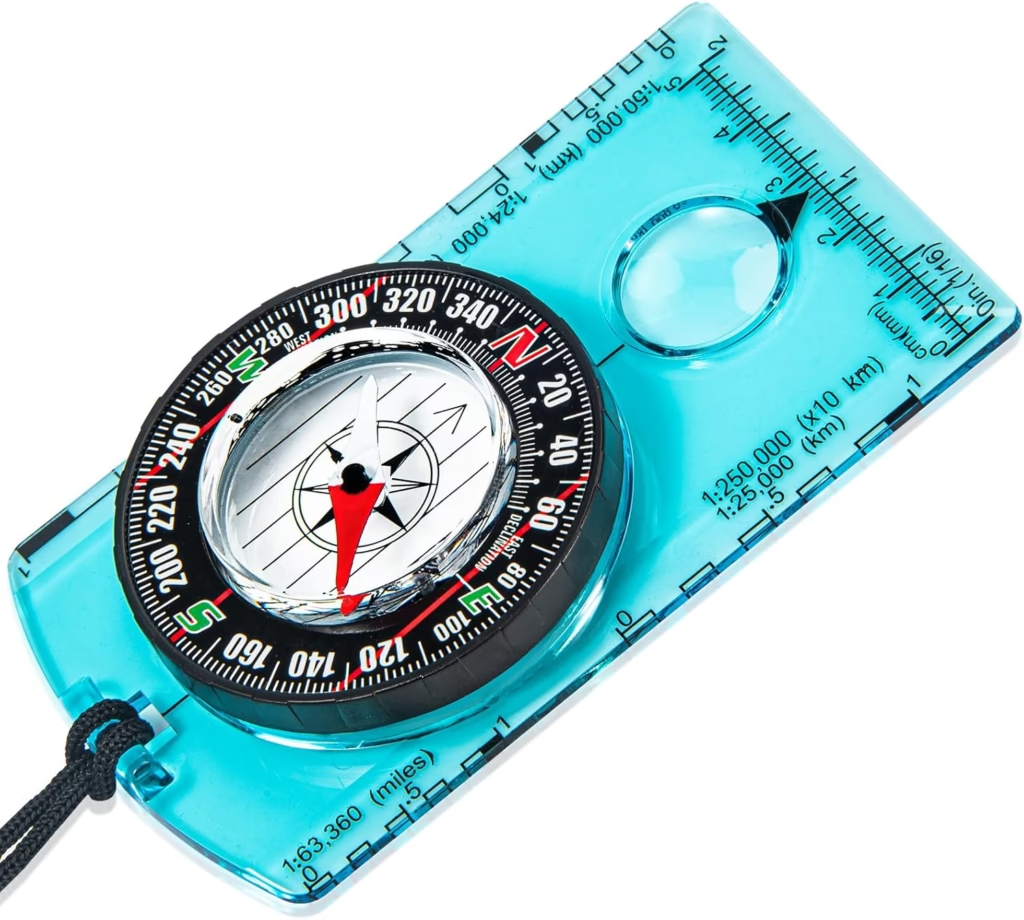
Best for: Occasional hikers who need basic direction finding without spending much.
At five bucks and change, we expected the Nihtdoy to be garbage. It’s not. The liquid-filled capsule genuinely reduces needle wobble compared to air-filled cheapies, though it still bounces more than pricier options. The transparent baseplate with measurement scales works for basic map plotting, assuming you’re patient with the wobbly needle.
The bright yellow color makes it impossible to lose, which matters when you’re digging through a pack at dusk. At 0.08 pounds, you literally won’t notice it’s there. During testing, accuracy stayed within 5 degrees of our Suunto, acceptable for general navigation. The plastic feels cheap and picked up scratches quickly, but it kept working. After two months, tiny bubbles appeared in the liquid, though they haven’t affected function yet. For the price of a fancy coffee, it’s decent backup or starter compass.
Pros
- Dirt cheap
- Weighs nothing
- Liquid dampening helps
- Can’t lose yellow color
Cons
- Needle wobbles
- Cheap plastic scratches
- Bubbles forming already
Should you get it?
Fine for occasional use or kids. Serious hikers should spend more.
7. 133 Supply Tactical Paracord Compass Bracelet – Best for Backup navigation
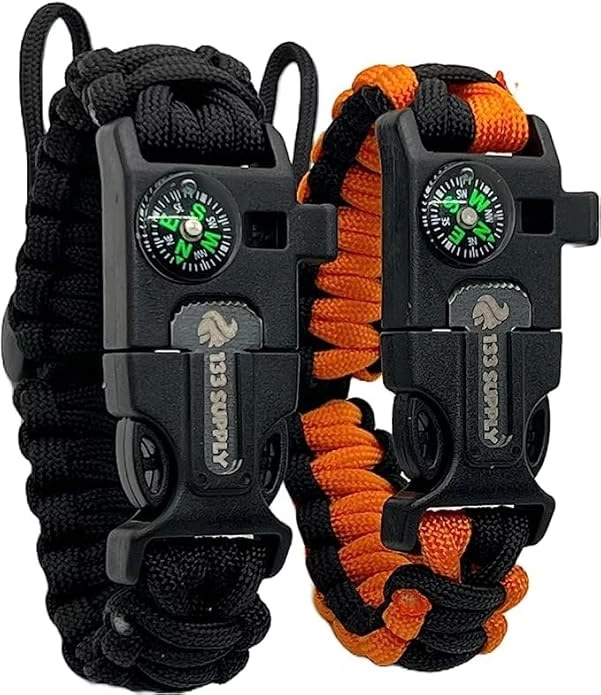
Best for: People who want emergency navigation always on their wrist, plus survival tools.
This paracord bracelet compass falls into “better than nothing” territory. The tiny button compass gives you cardinal directions, accurate within maybe 10 degrees on a good day. We wore it for a month straight, through showers, scrambles, and stream crossings. The paracord stayed tight, the whistle still screams, and the ferro rod throws decent sparks with practice.
The compass itself sits exposed on your wrist, getting bumped constantly. Readings require holding your arm perfectly level, tricky when scrambling or tired. The ferro rod needs serious scraping to produce usable sparks, not ideal when you’re cold and shaking. As actual navigation tool, it’s marginal. As always-with-you backup that includes 12 feet of paracord for emergencies, it makes sense. The whistle actually impressed us, loud enough to hear across a valley.
Pros
- Always on your wrist
- Whistle works great
- Paracord for emergencies
- Survives daily wear
Cons
- Compass barely adequate
- Ferro rod needs practice
- Bulky on small wrists
Should you get it?
Good for backup navigation and emergency supplies. Not a primary compass.
8. Aofar Military Compass Af-4580 – Best for Advanced users
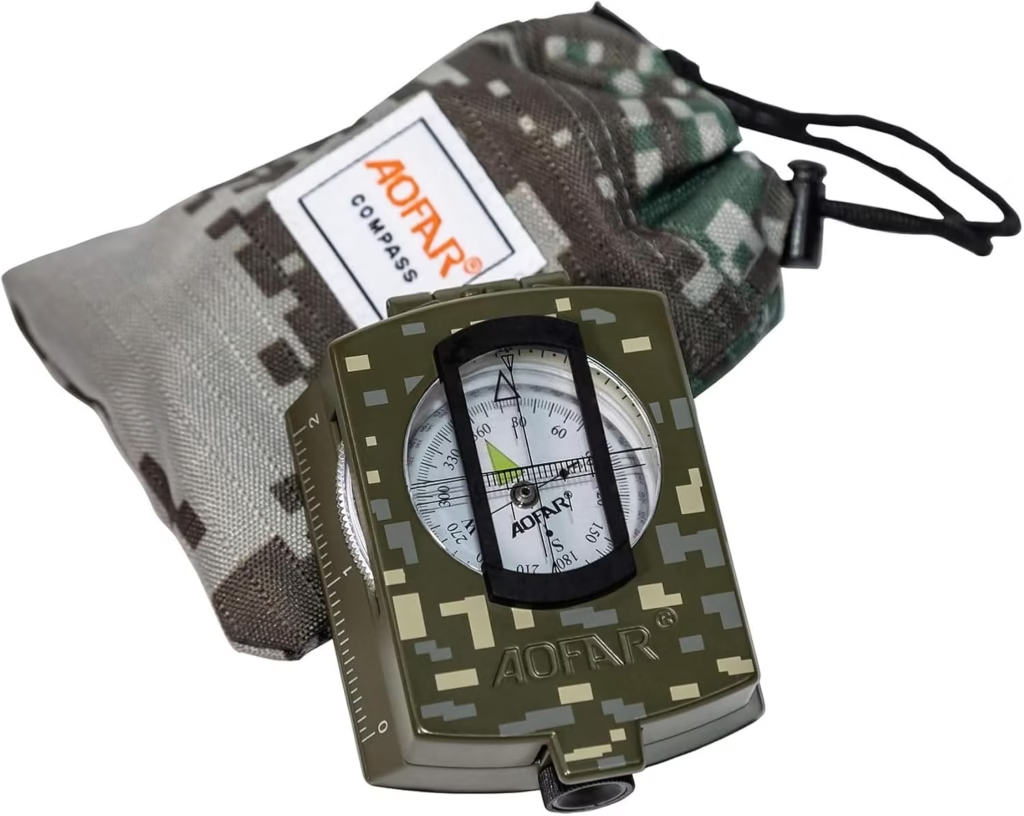
Best for: Experienced navigators who want military-spec accuracy without military pricing.
The AOFAR punches way above its $13 price tag. The lensatic sighting system rivals compasses costing three times more, letting us sight distant landmarks with precision. During a week navigating off-trail in Utah, it handled everything from triangulation to pace counting with the built-in distance calculator. The metal body survived drops onto sandstone that would’ve shattered plastic compasses.
The learning curve is real though. Using the sighting wire and lens system effectively takes practice and steady hands. The included instruction manual reads like it was translated by robots, so YouTube tutorials are essential. Once mastered, the precision is remarkable. We consistently got bearings within 2 degrees of our GPS readings. The waterproofing held up through desert thunderstorms, and the shakeproof claim proved true after some accidental pack tosses. The camo pattern makes it hard to spot if dropped, so we added an orange lanyard immediately.
Pros
- Military-grade accuracy
- Bomb-proof construction
- Distance calculator included
- Incredible value
Cons
- Steep learning curve
- Camo hides too well
- Complex for beginners
Should you get it?
Best advanced compass under $20. Beginners should start simpler.
Disclosure: All compasses were purchased at retail or borrowed from fellow hikers for independent testing. Some links may earn small commissions that support further gear testing.
What We Tested For
We focused on three things that matter when you’re actually lost: how quickly the needle settles when you’re breathing hard, whether you can read it in bad conditions, and if it survives real trail abuse. Getting fancy features is pointless if the compass fails when you drop it on granite or can’t read it through foggy glasses at dawn.
Testing Methods
- Accuracy checks against GPS coordinates at 15 different backcountry waypoints, noting deviation in degrees
- Waterproof testing through 6 stream crossings and 2 full days of Pacific Northwest rain
- Drop tests from chest height onto granite, dirt, and gravel (3 drops each surface)
- Low-light navigation during 5 pre-dawn starts and 3 after-dark returns
- Temperature testing from 25°F mornings to 95°F afternoon scrambles
- Teaching 3 beginners basic navigation to evaluate ease of use
This approach beats lab testing because compasses fail differently when you’re tired, wet, and stressed. We discovered issues like needles sticking after temperature swings and bezels that slip with sweaty hands that pristine indoor testing would miss.
Test Results
| Compass | Accuracy (°) | Waterproof | Drop Survival | Night Use | Ease of Learning | Weight (oz) | Overall Score |
|---|---|---|---|---|---|---|---|
| Coghlan’s Carabiner | ±5° | Good | Excellent | Poor | Easy | 0.5 | 7.2 |
| TurnOnSport Orienteering | ±3° | Good | Good | Poor | Moderate | 1.2 | 8.3 |
| Sportneer | ±2° | Excellent | Excellent | Excellent | Easy | 2.5 | 9.2 |
| COTUXKER | ±3° | Excellent | Excellent | Poor | Hard | 3.0 | 8.8 |
| Suunto A-10 | ±1° | Excellent | Excellent | Poor | Easy | 1.1 | 9.6 |
| Nihtdoy | ±5° | Fair | Fair | Poor | Easy | 0.8 | 6.5 |
| 133 Supply Bracelet | ±8° | Good | Good | Poor | Very Easy | 2.0 | 6.8 |
| AOFAR Military | ±2° | Excellent | Excellent | Good | Very Hard | 2.8 | 9.4 |
Baseplate vs Lensatic: Understanding Your Options
The baseplate compasses (like the Suunto and TurnOnSport) excel at map work. You lay them directly on your map, align the edge with your route, and read your bearing through the transparent base. We found these significantly easier for beginners to master, usually within 30 minutes of practice. The downside shows up in precision sighting: holding a baseplate compass at arm’s length while sighting a distant peak introduces wobble that affects accuracy.
Lensatic models (the COTUXKER and AOFAR) flip this equation. Their fold-up sighting system with magnifying lens lets you nail precise bearings to distant objects, crucial for triangulation in featureless terrain. But using them with maps requires transferring bearings manually, adding steps and potential errors. During testing, experienced users got bearings within 1-2 degrees with lensatic models versus 3-5 degrees with baseplates. That precision comes at the cost of complexity: teaching someone to use a lensatic compass properly took us two hours versus 30 minutes for baseplates.
Quick Tip
If you mainly hike established trails with occasional map checks, go baseplate. If you bushwhack or navigate open terrain where triangulation matters, consider learning lensatic.
Waterproofing Reality Check
Every compass we tested claimed waterproofing, but performance varied wildly. The liquid-filled models handled moisture best, with the Suunto and Sportneer showing zero bubbles or fogging after repeated dunking. Air-filled designs like the cheap Nihtdoy developed condensation inside after temperature swings, though it usually cleared within minutes.
The real surprise came from construction quality rather than filling type. Metal-bodied compasses (COTUXKER and AOFAR) stayed completely dry inside despite rougher handling, while some plastic models developed hairline cracks near the bezel after drops that later let moisture seep in. The Sportneer impressed us by combining plastic construction with genuinely watertight seals, surviving both submersion tests and humid tent storage without issues.
Key Decision Factors
If you prioritize simplicity: Baseplate designs with clear degree markings get you navigating faster. The learning curve stays gentle and you can start using them effectively after watching one YouTube tutorial.
If you prioritize accuracy: Lensatic sighting systems deliver precision but demand practice. You’ll spend weeks mastering the technique but gain the ability to navigate precisely in challenging terrain where landmarks are distant.
If you prioritize night navigation: Glow-in-the-dark or tritium features become essential for alpine starts. Standard compasses force you to juggle a headlamp while taking bearings, adding complexity when you’re already tired.
Size Matters
Bigger compasses are easier to use with cold hands or gloves but harder to stow accessibly. We found 2-3 inch diameter models hit the sweet spot between usability and packability.
Before Buying
Understanding Declination
Magnetic north and true north differ depending on location, sometimes by 20+ degrees. Some compasses offer adjustable declination (you set it once for your area), while others require mental math for each bearing. For most hikers, mental adjustment works fine, but if math at altitude sounds awful, pay extra for adjustable declination.
Break-in Period
New compasses often have sticky needles or stiff bezels. Work the moving parts repeatedly before trusting them in the field. We spent 5-10 minutes spinning bezels and tilting new compasses to ensure smooth operation before trail testing.
Battery-Free Benefits
Unlike GPS units that die in cold or when batteries drain, compasses work forever. This reliability matters most during shoulder season when temperature swings from 70°F to 30°F drain electronics unexpectedly.
Storage Considerations
Keep compasses away from phones, magnets, and metal objects that affect needle accuracy. We learned this after storing one next to a magnetic phone mount and wondering why it pointed 30 degrees off for a week.
Final Recommendations
For budget hikers, the TurnOnSport orienteering compass delivers genuine navigation capability under $10. You sacrifice night visibility and premium materials but gain a tool that actually works for map and compass navigation. Pair it with free online tutorials and you’ll navigate better than most hikers relying solely on phones.
For serious trail time, the Suunto A-10 justifies its higher price through flawless performance and durability that’ll outlast multiple pairs of boots. Professional guides choose Suunto because they can’t afford equipment failures 20 miles from roads. The precision and reliability make it worthwhile for anyone spending 50+ days annually on trails.
For backup navigation, clip the Coghlan’s carabiner compass to your pack and forget about it until needed. It won’t replace proper navigation tools but provides directional guidance when phones die or primary compasses break.
Important: Always test compass accuracy against known landmarks before depending on it in unfamiliar terrain, especially with budget models that may have quality control issues.
Frequently Asked Questions About Best Hiking Compasses
Do I really need a compass if I have a GPS or smartphone?
Yes, especially for serious backcountry hiking. Phones die, break, or lose signal regularly in the mountains. We’ve personally experienced GPS failure during whiteout conditions when we needed navigation most. A compass weighs almost nothing, needs no batteries, and works in any weather. Think of it as insurance that costs less than a tank of gas.
What’s the difference between orienteering and lensatic compasses?
Orienteering compasses have transparent baseplates for direct map work, making them easier for beginners to learn basic navigation. Lensatic compasses use a sighting system with a lens for precise bearing to distant objects, better for advanced techniques like triangulation. Most hikers find orienteering styles more practical for trail use.
How accurate does a hiking compass need to be?
For trail hiking, accuracy within 5 degrees works fine since you’re following established paths. For off-trail navigation or bushwhacking, you want 2-3 degree accuracy. Remember that user error usually exceeds compass error, so practice matters more than buying the most precise model.
Can I use a military surplus compass for hiking?
Military surplus compasses often provide excellent value, offering professional-grade construction at reasonable prices. Just verify the tritium illumination (if present) still glows and check for damage. Many military compasses use mils instead of degrees, so make sure you understand the measurement system.
How do I know if my compass is broken or inaccurate?
Test it against known directions: sunrise (east), sunset (west), or compare with other compasses. The needle should settle within 3-5 seconds and point consistently. If it sticks, spins endlessly, or shows bubbles in liquid-filled models, it needs replacement. Annual accuracy checks against GPS coordinates help catch gradual degradation.
What size compass is best for hiking?
A 2-3 inch diameter compass balances usability with packability for most hikers. Smaller compasses work for backup but become hard to read precisely. Larger orienteering compasses offer easier map work but may not fit conveniently in pockets. Match size to your primary navigation needs and storage preferences.