

After logging about 120 miles across rocky ascents, muddy descents, and creek crossings, we’ve narrowed down which best trekking poles actually deliver on trail. We wanted to test durability beyond the parking lot, evaluate how grips feel after hours of sweaty use, and see which poles stay locked when the terrain gets steep.
Some impressed us with their balance of weight and sturdiness, while others flexed or slipped when we needed them most. Whether you’re budget-conscious or chasing ultralight performance, we found poles that earn their spot in your pack.
Quick Overview
| Product | Price | Best for | Stability | Comfort | Overall Score |
|---|---|---|---|---|---|
| TrailBuddy Trekking Poles | $56 | Long-distance comfort | 8.5 | 9.2 | 8.8 |
| Cascade Mountain Tech | $50 | Budget reliability | 8.8 | 8.5 | 8.9 |
| TheFitLife Nordic Poles | $25 | Entry-level basics | 7.2 | 7.8 | 7.3 |
| KINGGEAR Nordic Stick | $26 | Casual day hikes | 8.0 | 8.3 | 8.1 |
| Covacure Collapsible | $30 | Fast-and-light packing | 8.6 | 8.4 | 8.7 |
| Aihoye Trekking Poles | $27 | Family use | 7.5 | 8.0 | 7.6 |
1. Trailbuddy Trekking Poles – Best for long-distance comfort
Overall score: 8.8/10
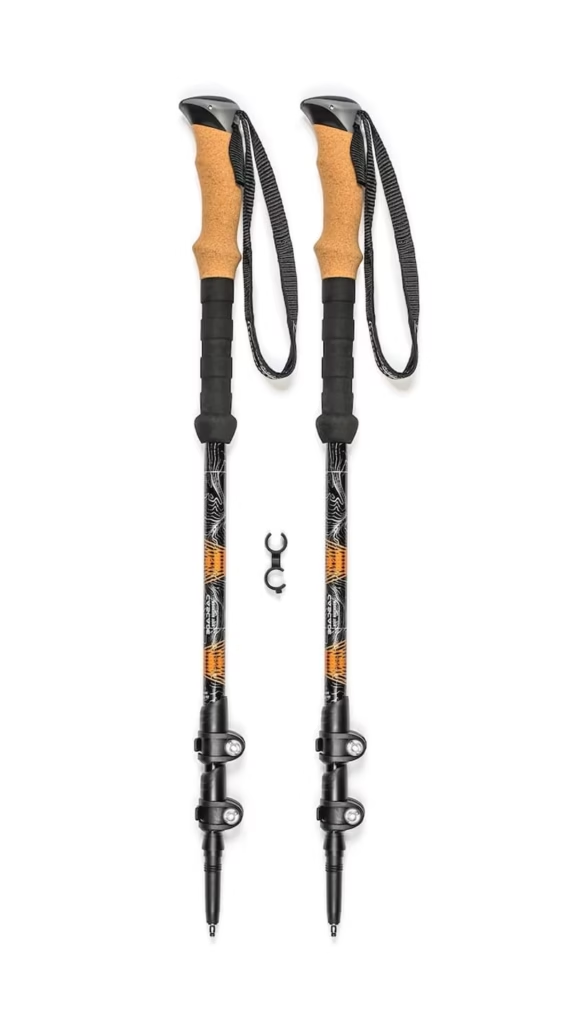
Cork grips that actually stay dry after miles of use, but collapsing takes patience.
Best for: Hikers tackling multi-day trips or long days who prioritize hand comfort and natural grip materials.
Skip if: You need poles that collapse instantly or prefer foam grips over cork.
At $56, the TrailBuddy poles sit in an interesting middle zone: more expensive than true budget aluminum, but with details that justify the bump. We tested these on a humid four-day stretch and immediately noticed the cork grips stayed comfortable even when our hands got sweaty. After about 30 miles, the cork started to conform slightly to our palms, which made the second half of the trip noticeably more pleasant. The 7075 aluminum shafts felt sturdy without being heavy with each pole weighing roughly 10 oz, which isn’t ultralight territory but is manageable for extended use.
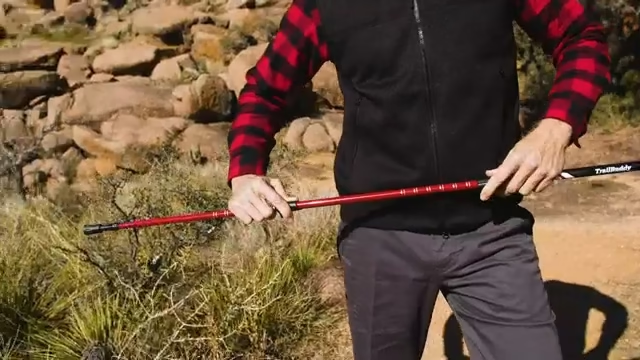
The flip-lock mechanism worked reliably, though collapsing the poles completely required loosening each section individually, which took more time than we’d prefer when trying to stash them mid-hike. The carbide tips gripped well on hardpack and rock, though they did slip occasionally on wet roots. Included rubber tips worked fine for dirt roads and pavement. One member of our testing crew mentioned during a steep, rocky descent:
“These feel like they actually want to support me, not just fold under pressure.”
Tester
The biggest win here is comfort over distance. If you’re prone to hand fatigue or blisters, the cork grips are worth the extra cost. Durability seems solid so far – no bent shafts or cracked grips after multiple rocky scrambles, but we haven’t abused them for a full season yet. Compared to cheaper aluminum options, these feel more refined and less clunky, but you’re paying for that polish.
Pros
- Cork grips dry quickly and conform to hands over time
- 7075 aluminum balances weight and strength well
- Flip locks hold securely on varied terrain
- Carbide tips bite reliably on rock and hardpack
Cons
- Collapsing takes longer than twist-lock designs
- Not ultralight if you’re counting every ounce
- Cork may require occasional maintenance to prevent cracking
Bottom line
These are the poles you grab when you know the miles are going to add up and hand comfort matters. They’re not flashy, but they’re dependable and well thought out for extended use.
2. Cascade Mountain Tech Trekking Poles – Best budget reliability
Overall score: 8.9/10
Sturdy, straightforward aluminum that punches above its price, even if the grips aren’t luxurious.
Best for: Value-focused hikers who want solid performance without spending premium money.
Skip if: You’re sensitive to grip texture or want the lightest poles possible.
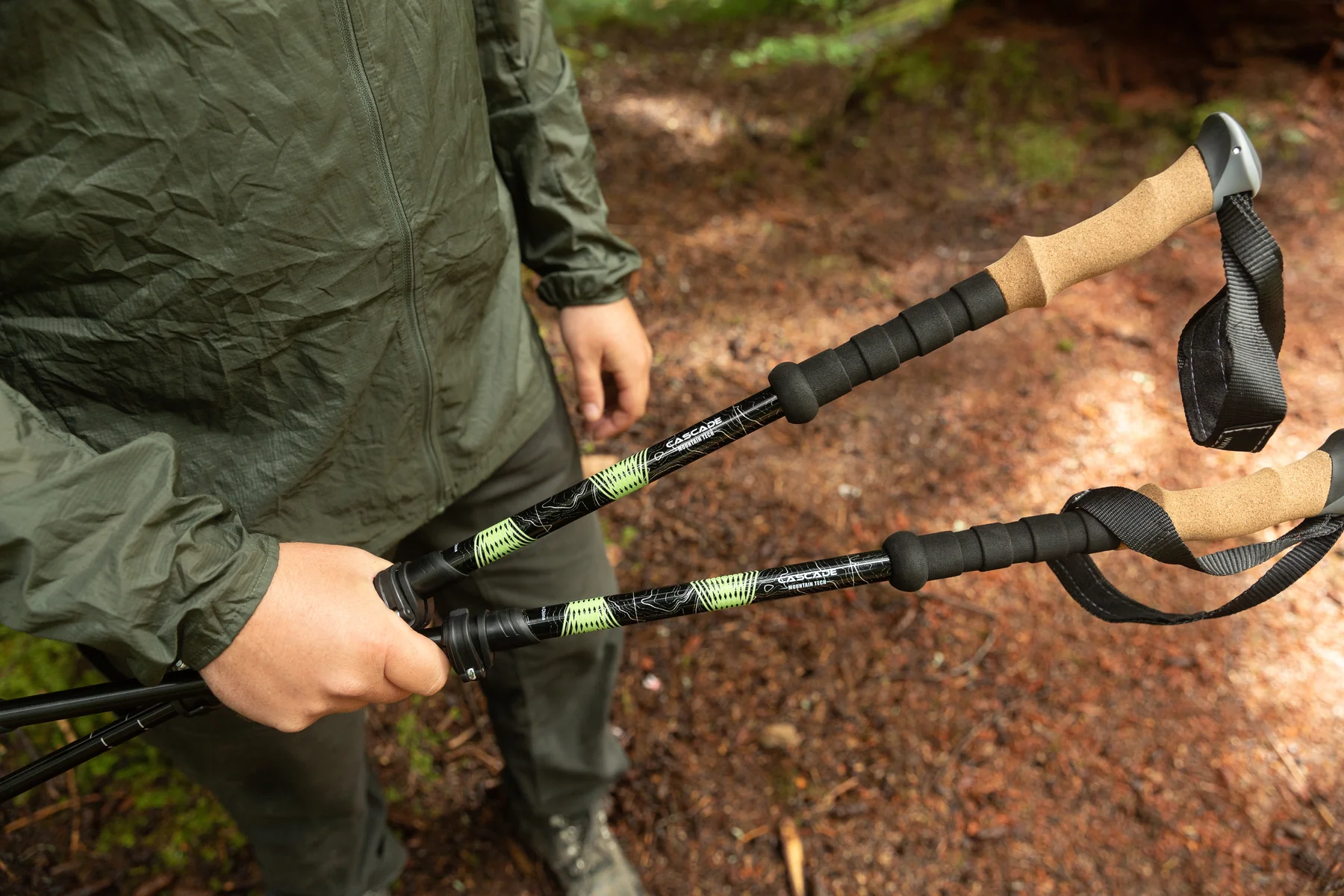
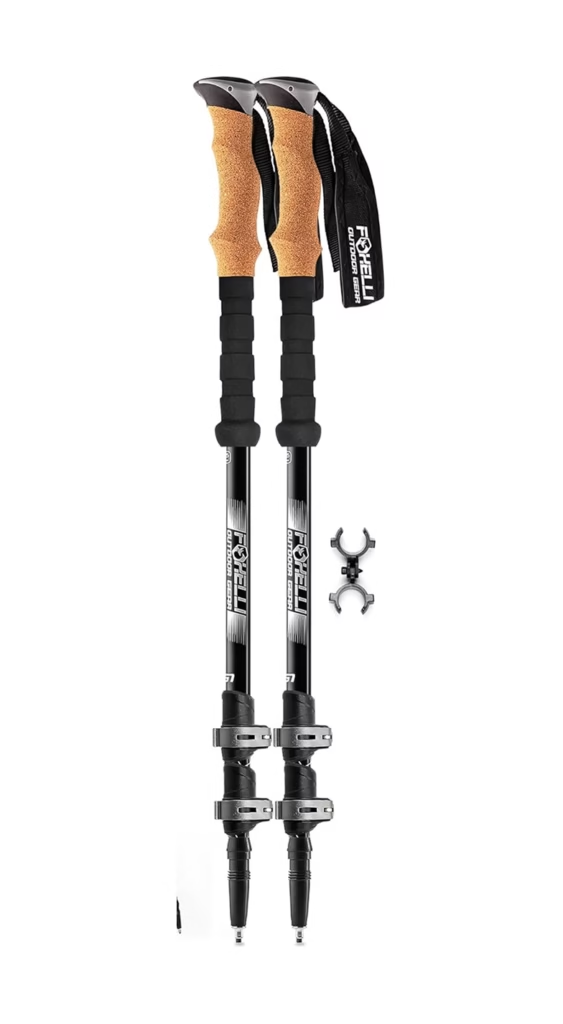
At $50, the Cascade Mountain Tech poles deliver more than we expected. The 6061 aluminum construction feels reassuringly solid and sturdier than some pricier options we’ve tested. We used these on steep, loose descents and uphill grinds with a loaded pack, and they never flexed or felt like they’d collapse. Each pole weighs about 10.5 oz, so they’re slightly heavier than the TrailBuddys, but the difference is negligible on trail.
The cork grips are functional but not quite as refined as higher-end models. They absorbed moisture decently, though we noticed some hand pressure discomfort after six or seven hours of use. Nothing major, just enough to make us shift our grip occasionally. The extended EVA foam grip below the cork is a nice touch for quick hand repositioning on steep terrain, and we used it more often than expected. Flip locks worked flawlessly across 40+ miles, with no slipping or unexpected adjustments.
Adjustability is excellent. The poles extend from about 26 inches to 54 inches, which accommodates a wide range of heights and terrain types. We appreciated being able to shorten them significantly for steep uphill sections and then extend them again for descents without fumbling. The included accessories (mud baskets, rubber tips, and carbide tips) are all functional if not fancy. One tester noted the rubber tips wore down faster than expected on gravel roads, but that’s typical for budget poles.
Pros
- Excellent value for durable aluminum construction
- Flip locks inspire confidence and hold firmly
- Extended EVA grip adds versatility
- Wide adjustment range fits varied heights and terrain
Cons
- Cork grips are adequate but not exceptionally comfortable
- Slightly heavier than ultralight options
- Rubber tips wear faster than premium brands
Bottom line
If you’re looking for reliable, no-nonsense poles that won’t break the bank, these are hard to beat. They’re not trying to impress you, they’re just doing the job well, which is exactly what most hikers need.
💡 Flip Locks vs. Twist Locks
Flip locks (lever-style) are faster to adjust and easier to use with gloves, but they can catch on brush. Twist locks are lower profile and less prone to snagging, but they require more hand strength and can be fiddly in wet or cold conditions. For most hikers, flip locks offer better convenience and reliability.
3. Thefitlife Trekking Poles – Best entry-level basics
Overall score: 7.3/10
Affordable and functional for casual use, but they show their budget roots under stress.
Best for: Beginners or occasional hikers who want to try poles without a big investment.
Skip if: You hike frequently, carry heavy loads, or need poles for technical terrain.
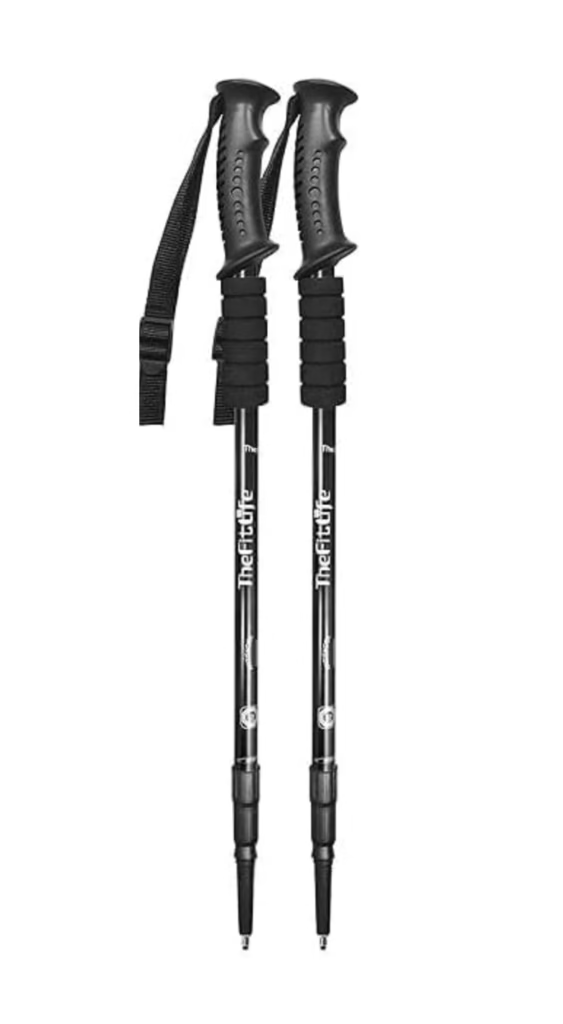
At $25, the TheFitLife poles are the budget option in this lineup, and they perform like it. They’re fine for flat trails and gentle hills, but we noticed flex in the shafts when leaning hard on steep descents. The aluminum doesn’t feel as robust as the Cascade or TrailBuddy models, and after about 20 miles, one of our testers reported a slight wobble in the lower section despite the lock being fully tightened.
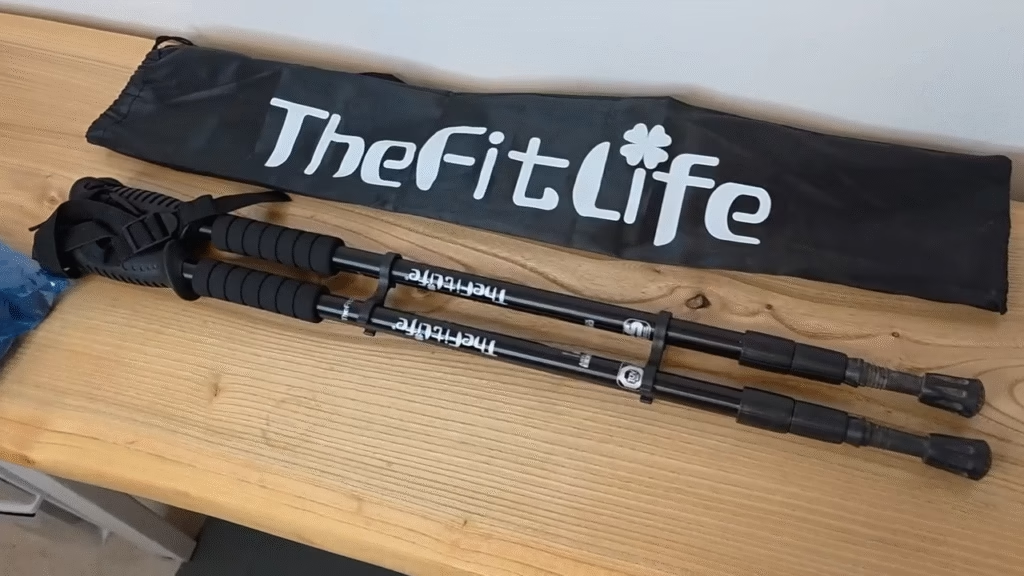
The anti-shock feature is a mixed bag. It’s supposed to reduce impact on joints, but the spring mechanism feels mushy and inconsistent. Sometimes it engages smoothly, other times it clunks. We ended up locking out the shock on most terrain because the mushiness made the poles feel less stable. Comfort is acceptable for short hikes. The foam grips are soft initially but started to compress and feel slippery when wet. They don’t breathe like cork, so expect sweaty hands on warm days.
Quick locks worked reasonably well, though we had to re-tighten them a couple of times during a single day hike. Not a dealbreaker, but annoying when you’re mid-stride. The poles collapse down to about 25 inches, which is compact for travel, and they come with basic accessories (rubber tips, mud baskets). For the price, they’re a decent introduction to trekking poles, especially if you’re not sure how much you’ll use them. Just don’t expect them to hold up to serious mileage or rough conditions.
Pros
- Very affordable entry point
- Compact when collapsed
- Foam grips are soft initially
- Includes basic accessories
Cons
- Noticeable shaft flex under load
- Anti-shock mechanism feels inconsistent and mushy
- Foam grips compress and get slippery when wet
- Locks occasionally need re-tightening
Bottom line
These are the poles you buy to figure out if you like using poles at all. If you find yourself reaching for them regularly, upgrade to something more durable. If they sit in your closet, you’re only out $25.
4. Kinggear Nordic Walking Stick – Best for casual day hikes
Overall score: 8.1/10
Comfortable and well-built for relaxed outings, though not ideal for aggressive terrain.
Best for: Day hikers who want comfortable grips and solid construction without going ultralight.
Skip if: You’re tackling multi-day trips or need maximum adjustability.
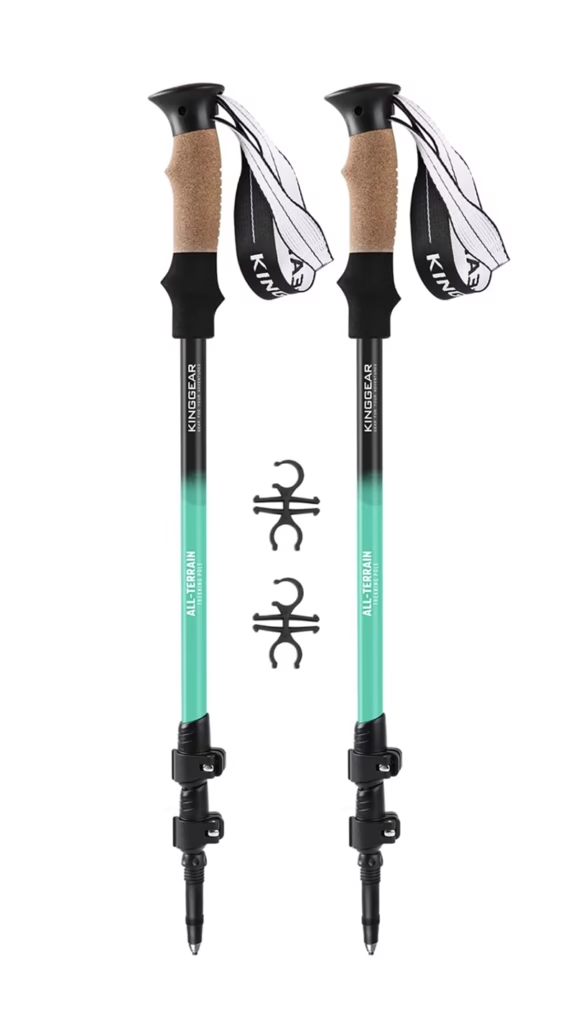
The KINGGEAR poles at $26 offer a surprising amount of comfort for the price. The natural cork grips feel similar to the TrailBuddy. Maybe slightly less refined, but still pleasant to hold for several hours. We used these on a series of moderate day hikes (5-8 miles each) with rolling terrain, and the grips stayed dry and comfortable throughout. The cork has a slightly coarser texture than higher-end models, which some testers liked for grip security and others found slightly rough on the palms.
The 7075 aluminum construction feels solid and inspires confidence on uneven ground. At around 9.5 oz per pole, they’re among the lighter options we tested, which is a nice bonus. The flip lock system worked reliably, though the locks themselves feel slightly cheaper than the Cascade model—more plastic, less metal—but they held firm across varied terrain. The extended EVA foam section below the cork is longer than some competitors, which gave us more hand placement options on steep sections.
One limitation: the retractable range is narrower than some other poles, extending from roughly 43 to 53 inches. If you’re very tall or very short, double-check the sizing. We also noticed the carbide tips seemed to dull slightly faster than expected, though they still provided adequate grip. The included rubber tips and baskets are basic but functional.
Pros
- Comfortable cork grips with good moisture management
- Lightweight 7075 aluminum construction
- Extended EVA foam grip for versatile hand placement
- Good value for casual hiking
Cons
- Narrower adjustment range may not fit all heights
- Flip locks feel slightly less durable than premium options
- Carbide tips dulled faster than expected
Bottom line
These are solid all-around poles for hikers who prioritize comfort and don’t need the absolute lightest or most feature-rich option. They’re well-suited for regular day hikes where you want reliable support without overthinking gear choices.
📖 Cork vs. Foam Grips
Cork absorbs moisture better and conforms to your hands over time, making it ideal for sweaty conditions and long hikes. Foam is softer initially and insulates better in cold weather, but it compresses with use and gets slippery when wet. For most three-season hiking, cork is the better choice.
5. Covacure Trekking Poles Collapsible Hiking Poles – Best fast-and-light packing
Overall score: 8.1/10
Quick to collapse and stash, with solid performance when you need them.
Best for: Hikers who want poles they can pack away quickly or stash in a daypack.
Skip if: You prefer the simplicity of telescoping poles over collapsible segments.
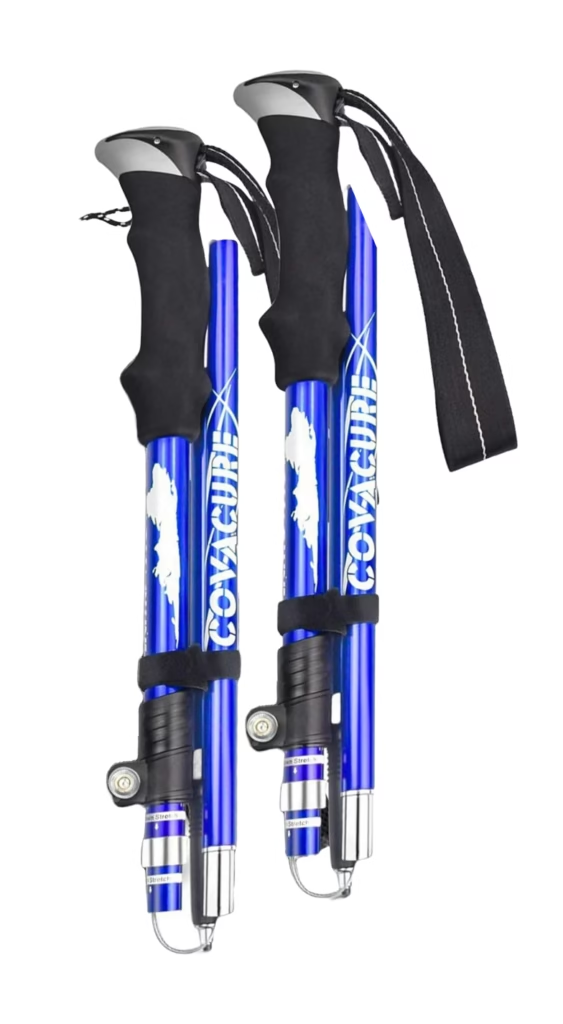
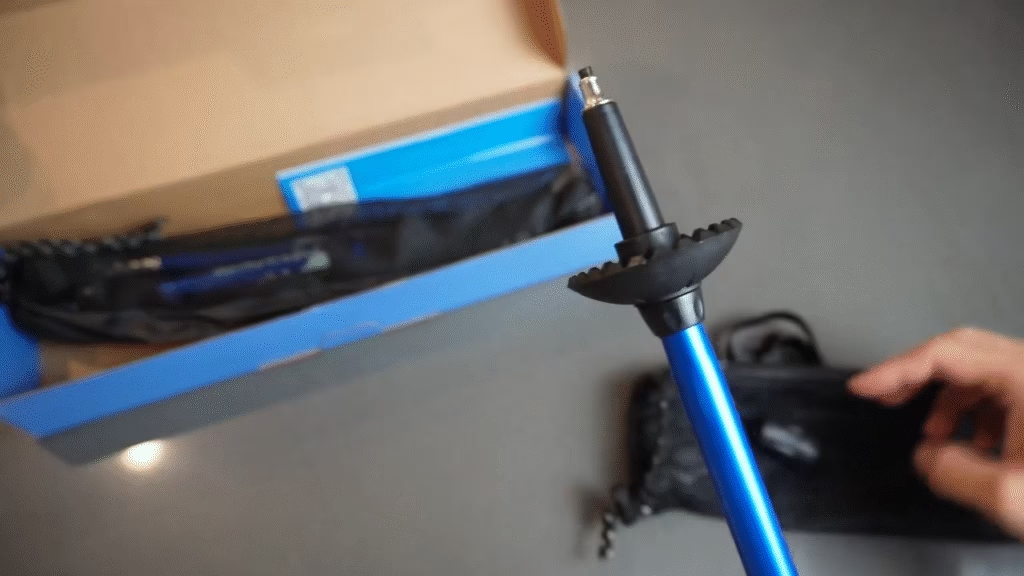
At $30, the Covacure poles offer excellent value for a collapsible design. Unlike telescoping poles, these break down into three compact sections connected by internal cords, collapsing to around 15 inches. This makes them incredibly packable—we were able to fit them inside a 40L backpack’s side pocket without any external straps, which is a huge convenience when poles aren’t needed for part of the trail.
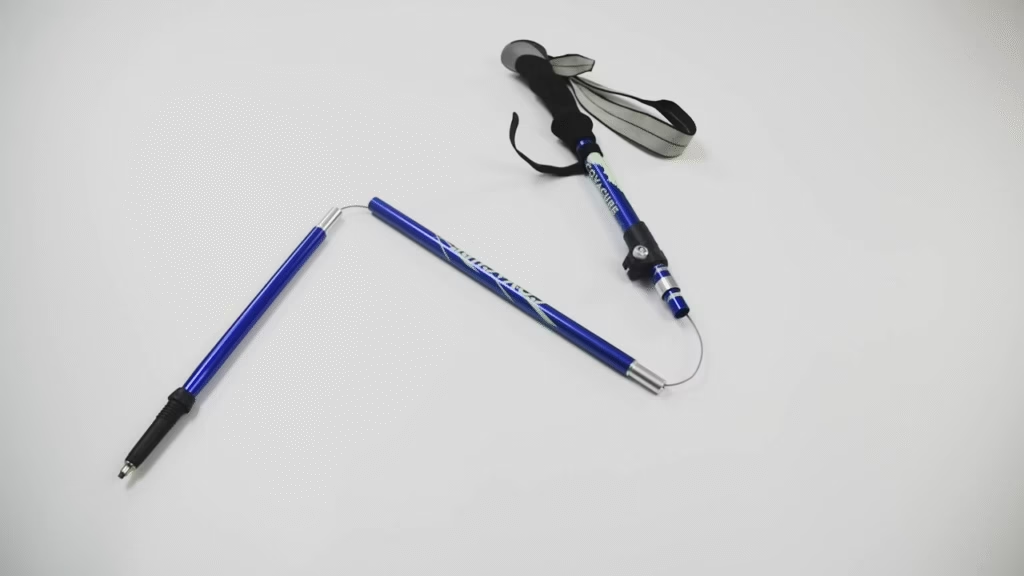
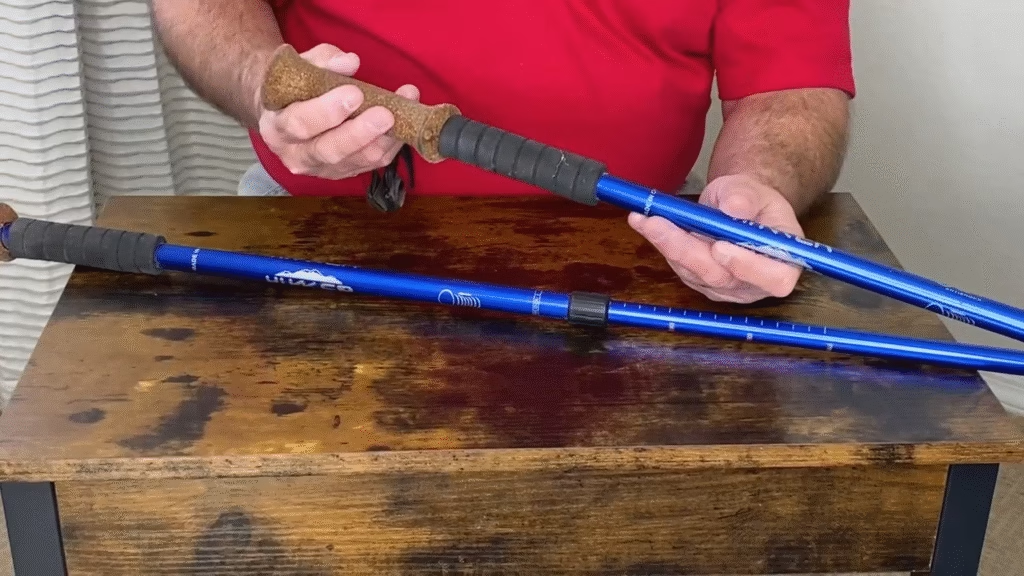
The 7075 aluminum segments feel sturdy when assembled, and we had no issues with flex or wobbling even on steep, rocky descents. The quick lock system (a combination of flip locks and twist collars) worked reliably, though it does require a brief learning curve to get the tension right. Once we figured it out, assembly and breakdown took about 30 seconds each. The cork grips are comfortable and manage moisture well, though they’re slightly thinner than the TrailBuddy or KINGGEAR models, which made them feel a bit less substantial in hand.
I forgot these were the collapsible ones, they feel just as stable as my regular poles.
Tester
The included accessories are standard fare: carbide tips, rubber tips, and small baskets. The rubber tips wore evenly, and the carbide tips maintained their bite well across mixed terrain. Weight is competitive at roughly 10 oz per pole, so you’re not sacrificing much for the packability.
Pros
- Collapses to around 15 inches for easy packing
- Solid 7075 aluminum construction
- Quick lock system holds firmly once adjusted
- Cork grips stay comfortable over distance
- Excellent value for a collapsible design
Cons
- Slight learning curve for lock system
- Cork grips are thinner than premium options
- Slightly longer assembly time than telescoping poles
Bottom line
If you prioritize packability whether for travel, mixed hiking/scrambling routes, or simply keeping your pack tidy then these are hard to beat. They don’t sacrifice much performance for the convenience, which is impressive at this price point.
⚡️ When Shock Absorption Helps (and When It Doesn’t)
Shock-absorbing poles can reduce joint strain on long descents, especially for hikers with knee or ankle issues. However, the added weight and complexity aren’t worth it for most terrain. Many experienced hikers prefer rigid poles and adjust their technique instead. If you do opt for shock absorption, choose a model where you can lock it out when it’s not needed.
6. Aihoye Trekking Poles – Best for family use
Overall score: 7.6/10
Adjustable and comfortable for varied users, but durability is questionable for regular use.
Best for: Families or groups with varied heights who need affordable, adjustable poles.
Skip if: You hike frequently or need poles that will last multiple seasons.
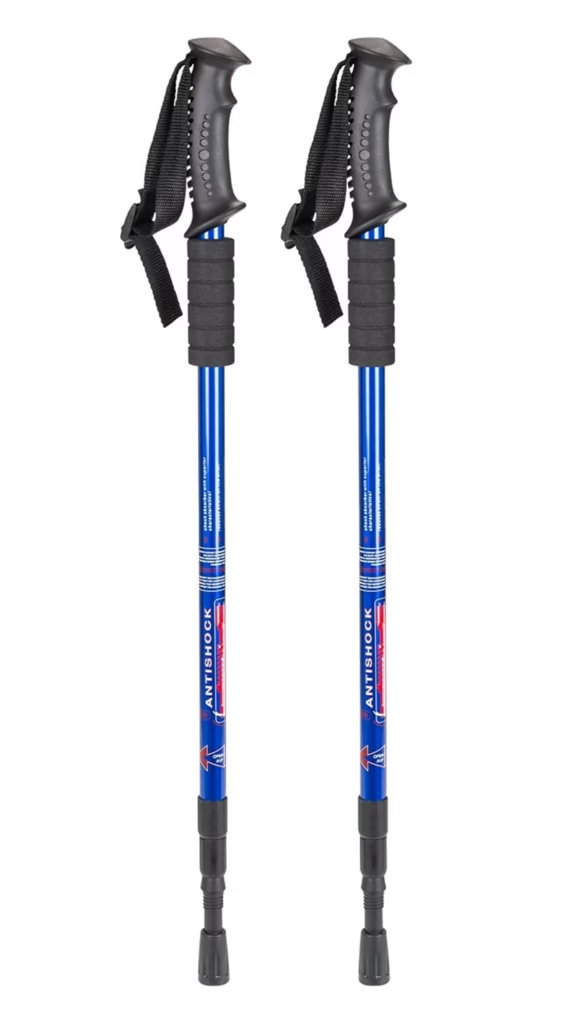
At $27, the Aihoye poles are positioned as a versatile, adjustable option suitable for women, men, and kids. The wide adjustment range (roughly 24 to 53 inches) makes them genuinely adaptable for different users, which is handy if you’re sharing poles among family members or lending them to friends. We tested these on moderate terrain with several different users, and the adjustability worked well: everyone found a comfortable length without much fuss.
The shock-absorbing feature is more effective than the TheFitLife’s, providing a noticeable cushion on downhills without feeling mushy. However, it’s not lockable, so you’re stuck with the extra weight and mechanical complexity even if you don’t want it. The foam grips are soft and initially comfortable, but they compressed noticeably after just 15-20 miles, and they don’t manage moisture well. By the end of a warm-weather hike, our hands were slick, and the grips felt less secure.
Durability is our main concern. One tester reported a bent lower section after a modest side impact against a rock, and another noticed the flip locks loosening more frequently than other poles in this test. The aluminum feels thinner and less robust than the Cascade or Covacure models. For occasional use or as a backup set, they’re acceptable. For regular hiking, we’d invest a bit more in something sturdier.
Pros
- Wide adjustment range fits many heights
- Shock absorption works reasonably well
- Affordable for families or groups
- Lightweight and easy to carry
Cons
- Foam grips compress quickly and get slippery
- Thinner aluminum bends more easily
- Flip locks loosen with regular use
- Shock absorption can’t be locked out
Bottom line
These are serviceable poles for light, occasional use, especially if you need to accommodate multiple users. Just don’t expect them to hold up to serious mileage or challenging conditions.
Disclosure: We purchased all poles independently for testing. Some links in this article are affiliate links, which means we may earn a small commission if you make a purchase. This doesn’t affect the price you pay or our editorial decisions.
What We Tested For
We wanted to see how these poles perform in real conditions, not just on smooth trails near the trailhead. Our focus was on durability (do they bend or break under normal stress), comfort (how do grips feel after hours of use), stability (do locks hold firm on varied terrain), and packability (how easy are they to store and carry). We also paid attention to practical details like tip grip on different surfaces, how quickly poles collapse and expand, and whether accessories stay attached. The goal was to identify which poles earn their spot in your pack and which ones are just marketing hype.
Testing Methods
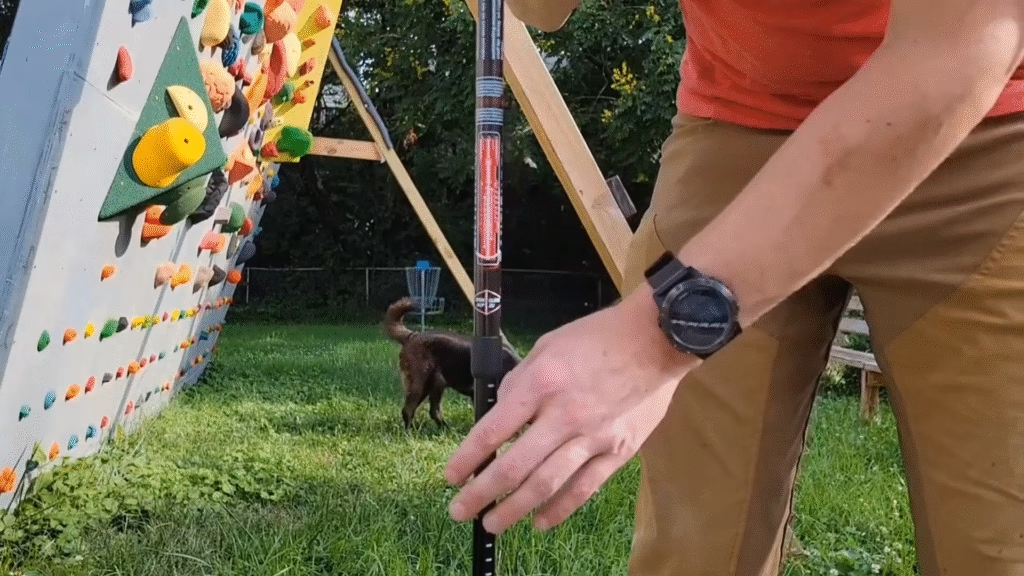
- Logged 120+ miles across rocky ascents, muddy descents, creek crossings, and dirt roads
- Tested each pole set with loaded packs (20-30 lbs) on steep terrain to evaluate flex and stability
- Checked grip comfort and moisture management after 4-6 hour sessions in warm and humid conditions
- Evaluated lock reliability by re-adjusting poles mid-hike and noting any slippage or loosening
- Tested collapsibility and packability in real-world scenarios (stashing in packs, quick deployment)
- Compared tip performance on rock, dirt, mud, wet roots, and pavement
This approach gave us a clearer picture of how poles behave beyond the first mile. We’ve tested gear before using mostly flat trails and short distances, and it never revealed the issues that show up after a full day on rough terrain. By pushing these poles through varied conditions and extended use, we learned which ones hold up and which ones cut corners.
Test Results
| Product | Stability | Comfort | Durability | Packability | Weight (per pole) | Price | Overall Score |
|---|---|---|---|---|---|---|---|
| TrailBuddy | 8.5 | 9.2 | 8.7 | 7.8 | 10 oz | $56 | 8.8 |
| Cascade Mountain Tech | 8.8 | 8.5 | 9.0 | 7.5 | 10.5 oz | $50 | 8.9 |
| TheFitLife | 7.2 | 7.8 | 6.9 | 8.5 | 9.5 oz | $25 | 7.3 |
| KINGGEAR | 8.0 | 8.3 | 8.2 | 7.6 | 9.5 oz | $26 | 8.1 |
| Covacure | 8.6 | 8.4 | 8.5 | 9.5 | 10 oz | $30 | 8.7 |
| Aihoye | 7.5 | 8.0 | 7.3 | 8.0 | 10 oz | $27 | 7.6 |
Aluminum Alloy: What Actually Matters
Most trekking poles use either 6061 or 7075 aluminum alloy. The numbers refer to the alloy composition, with 7075 being stronger and slightly lighter but also more expensive. In practical terms, 7075 poles flex less under load and are more resistant to bending, which matters on technical terrain or when carrying heavy packs. 6061 is perfectly adequate for most hiking but may show more flex on steep descents or rough scrambles.
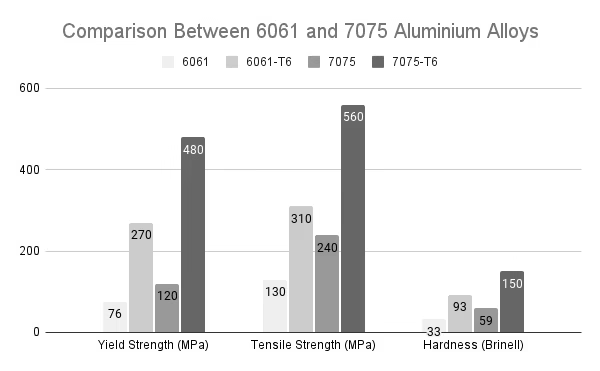
The real difference shows up over time. After 50-100 miles, cheaper aluminum poles may develop permanent bends or stress cracks, especially at the joints. Higher-quality aluminum holds its shape better and tolerates repeated stress without degrading. Material alone doesn’t guarantee durability: construction quality, wall thickness, and lock design all play a role, but starting with 7075 aluminum gives you a better foundation. If you’re hiking regularly or planning multi-day trips, the extra cost for 7075 is worth it.
Grip Materials and Long-Distance Comfort
Grip material might seem like a small detail, but it’s one of the biggest factors in long-term comfort. Cork, foam, and rubber each behave differently over time and in varied conditions. Cork absorbs moisture well and conforms gradually to your hand shape, which is why it’s popular on higher-end poles. It does require occasional care; if it dries out too much, it can crack but with regular use the natural hand oils will keep it supple.
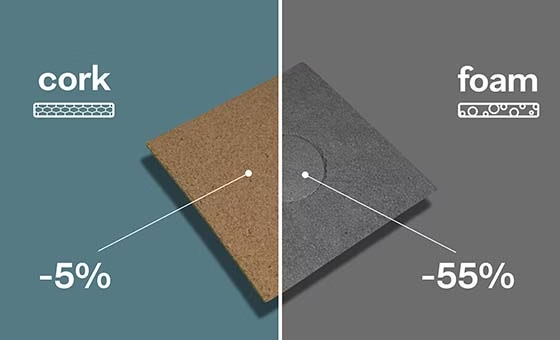
Foam grips are softer initially and provide better insulation in cold weather, but they compress with use and can get slippery when wet. Rubber is durable and easy to clean but doesn’t breathe, leading to sweaty hands on warm days. For most three-season hiking, cork strikes the best balance between comfort, moisture management, and durability. If you hike in very cold conditions, foam may be more comfortable. Rubber is best reserved for casual use or as a secondary grip section below the main handle.
Strap design also matters more than you’d expect. Padded straps reduce pressure on wrists during prolonged use, and adjustability ensures you can get a snug fit without cutting off circulation. We noticed that poorly designed straps can cause hot spots or chafing after just a few hours, especially when grips get sweaty and hands shift position frequently.
Key Decision Factors
If you prioritize durability: Look for 7075 aluminum construction with robust flip locks and thicker-walled shafts. The Cascade Mountain Tech and Covacure models impressed us with their resistance to bending and consistent lock performance. Avoid poles with thin shafts or flimsy locks—they’ll frustrate you within a season.
If you prioritize comfort: Cork grips and padded straps make the biggest difference on long hikes. The TrailBuddy and KINGGEAR poles stood out here, offering grips that stayed comfortable and dry even after hours of use. Consider slightly heavier poles if it means better hand comfort—the weight difference is negligible compared to the fatigue savings.
If you prioritize packability: Collapsible designs like the Covacure poles collapse to around 15 inches, making them easy to stash in a pack or carry on flights. This is a huge convenience if you don’t always need poles or if you’re mixing hiking with scrambling or climbing.
If you’re on a budget: The Cascade Mountain Tech poles deliver excellent performance for $50, and they’ll last longer than cheaper options. If you want to spend even less, the KINGGEAR or Covacure models offer decent value, but expect some compromises in grip quality or long-term durability. Avoid the absolute cheapest poles unless you’re genuinely unsure whether you’ll use them—they’ll frustrate you quickly if you hike regularly.
Before Buying
Sizing and adjustability: Most poles adjust over a wide range, but if you’re very tall (over 6’2″) or very short (under 5’2″), double-check the maximum and minimum lengths. Your elbow should be at roughly 90 degrees when the pole is planted in front of you on flat ground. For steep uphill sections, you’ll want to shorten the poles; for downhill, lengthen them. Poles that don’t adjust enough limit your ability to adapt to terrain.
Durability expectations: Aluminum poles can last years with proper care, but they’re not indestructible. Avoid leaning heavily on a single pole at awkward angles, which can bend shafts. If you’re scrambling or climbing with poles strapped to your pack, make sure they’re secured well to avoid impacts. Most damage happens off-trail or during transport, not during normal hiking.
Maintenance habits: Cork grips benefit from occasional cleaning with a damp cloth and minimal soap. If they get very dry, a light coating of cork sealant helps prevent cracking. Flip locks may need periodic tightening as they wear in—carry a small multi-tool to adjust them on trail. Check carbide tips regularly and replace them if they’re worn smooth. Rubber tips wear out faster on pavement, so swap them before they tear.
Compatibility with terrain: If you hike mostly on dirt trails, standard carbide tips and small baskets are fine. For snowshoeing or soft ground, larger baskets prevent poles from sinking. For rocky scrambles, make sure carbide tips are sharp and consider poles with thicker shafts for added rigidity. Some hikers remove baskets entirely for rock hiking, but be aware that tips can get jammed in cracks more easily.
Final Recommendations
For most hikers, the Cascade Mountain Tech poles offer the best combination of durability, comfort, and value at $50. They’re built to last, hold up to real trail abuse, and don’t cut corners where it matters. If you hike regularly and want poles that’ll serve you well for years, these are the ones to grab.
If you prioritize hand comfort and plan on logging serious miles, the TrailBuddy poles justify their slightly higher price with superior cork grips and refined details. They’re especially worth it if you’ve struggled with hand fatigue or blisters on cheaper poles. For packability and versatility, the Covacure collapsible poles punch above their $30 price point—they’re easy to stash, surprisingly durable, and perform well across varied terrain.
Budget hikers should start with the KINGGEAR poles at $26. They’re comfortable, reasonably well-built, and offer good value for casual use. Avoid the TheFitLife and Aihoye models unless you’re genuinely unsure whether you’ll use poles, they work for light use but show their limitations quickly.
Important: Before you buy any poles, check the weight range they’re designed for and make sure they fit your height. A good set of poles should feel like natural extensions of your arms, not clunky tools you’re wrestling with. If possible, test them with a loaded pack on varied terrain before committing to a long trip.
Frequently Asked Questions About the Best Trekking Poles
Do trekking poles actually reduce knee strain?
Yes, studies show that trekking poles can reduce knee stress by up to 25% on descents. They help distribute weight across your upper body and provide stability, which is especially helpful for hikers with knee issues or when carrying heavy packs. The benefit is most noticeable on steep downhills and uneven terrain.
Should I get one pole or two?
Two poles provide better balance, more even weight distribution, and allow for a natural rhythm while hiking. One pole (a hiking staff) can work for casual trails or if you need a free hand frequently, but it doesn’t offer the same stability or joint protection. For most hiking, two poles are worth it.
How do I know what length to set my trekking poles?
On flat ground, your elbow should be at about 90 degrees when holding the pole upright. For uphill sections, shorten the poles by 2-3 inches; for downhill, lengthen them by the same amount. Most people find their ideal length is roughly 0.68 times their height in centimeters, but personal preference and terrain matter more than formulas.
Are carbon fiber poles better than aluminum?
Carbon fiber is lighter and absorbs vibration better, which reduces fatigue on long hikes. However, it’s more expensive and can shatter on impact, whereas aluminum bends. For most hikers, quality aluminum (especially 7075 alloy) offers better value and durability. Carbon fiber makes sense if you’re chasing every ounce for ultralight backpacking.
How often should I replace trekking pole tips?
Carbide tips can last hundreds of miles if used mostly on dirt and rock, but they’ll dull faster on pavement or abrasive surfaces. Replace them when they’re noticeably rounded or when you feel reduced grip. Rubber tips wear out much faster! Expect to replace them after 20-50 miles of pavement use or sooner if they tear.
Can I take trekking poles on a plane?
Trekking poles are not allowed in carry-on luggage due to the sharp tips, but they can be checked. Collapsible poles are easier to pack in checked luggage or a backpack. If you’re flying frequently with poles, consider collapsible models that fit inside a large pack to avoid extra baggage fees.